







Best Deep Replenishment Night Cream: How to Choose the Right Overnight Moisturizer for Mature Skin

A deep replenishment night cream is designed to do much more than moisturize your skin overnight. The best formulas replenish lost moisture, strengthen the skin barrier, support collagen, and help improve the appearance of fine lines while skin is in its natural nighttime recovery window. For mature skin, dry skin, and hormonally changing skin, that distinction matters.
Many night creams feel rich at first touch but leave skin tight again by morning. A true deep replenishment night cream should help skin hold water, restore comfort, improve visible resilience, and support smoother-looking texture over time. It should feel cushioning, but it should also be intelligently built: humectants to draw water in, barrier lipids to reduce moisture loss, peptides to support firmness, and well-delivered renewal ingredients such as encapsulated retinol when appropriate.
This guide explains what separates an ordinary overnight moisturizer from a high-performance overnight skin repair cream, how dermatologists think about mature and menopausal skin, and how to evaluate premium formulas without getting distracted by marketing language.
What Is a Deep Replenishment Night Cream?
A deep replenishment night cream is an overnight moisturizer designed to restore water, lipids, and visible skin resilience while you sleep. It is not simply a heavier day cream. The most effective versions combine three functions: immediate comfort, barrier support, and progressive improvement in visible signs of dryness, dullness, uneven tone, fine lines, and texture.
From a dermatologist perspective, “replenishment” should mean more than surface softness. The outer skin barrier is structured like a brick wall: skin cells are the bricks, and lipids such as ceramides, cholesterol, and fatty acids act like mortar. When that barrier is depleted, water escapes more easily, skin feels tight, and active ingredients can become harder to tolerate. Research reviews on ceramides and barrier function consistently connect barrier lipids with water retention and reduced transepidermal water loss. A night cream for dry skin should therefore do more than sit on top of the skin; it should help reinforce the environment that lets skin retain moisture.
The best deep replenishment formulas usually include humectants, emollients, occlusives, barrier lipids, antioxidants, peptides, and, when the formula is designed for tolerance, a retinoid or renewal technology. For mature skin, this multi-pathway approach is especially important because skin is often experiencing dryness, slower renewal, reduced elasticity, and uneven tone at the same time.
Why Most Night Creams Are Not True Deep Replenishment Night Creams
Many products called “night creams” are primarily texture stories. They feel thick, comforting, or luxurious, but they may not meaningfully address the underlying reasons skin wakes up depleted. A rich texture can reduce immediate dryness, but if the formula does not include water-binding humectants, barrier-supportive lipids, and targeted actives, the result may be temporary.
| Ordinary Night Cream | True Deep Replenishment Night Cream |
|---|---|
| Focuses mainly on richness and comfort | Combines comfort with hydration, barrier support, and visible renewal |
| May rely heavily on occlusive oils or butters | Uses humectants, lipids, peptides, and measured renewal actives |
| Can feel heavy but not improve morning dryness | Helps skin feel cushioned and look smoother by morning |
| Often designed for generic “anti-aging” | Better formulas address mature, dry, or hormonally changing skin needs |
A dermatologist would typically look past the jar claim and evaluate the ingredient architecture: does the formula address water loss, barrier disruption, collagen support, and uneven turnover in a balanced way? Does it avoid unnecessary fragrance for skin that may be more sensitive? Does it pair retinoids with replenishing ingredients rather than asking compromised skin to tolerate renewal alone?
Why Skin Repairs Itself at Night
Skin follows circadian rhythms. Published dermatology reviews describe nighttime as an important period for barrier recovery and cellular repair processes, while daytime skin is more focused on defense against ultraviolet light, pollution, and environmental stress. This is one reason overnight moisturizers can be so valuable: they support skin when it is already oriented toward recovery.
Nighttime is also practical. Retinoids are commonly used at night because they can increase sensitivity and because many consumers tolerate them better when paired with a moisturizer in an evening routine. A well-designed encapsulated retinol cream can support smoother-looking texture and fine lines while replenishing ingredients help offset dryness and irritation risk.
Think of nighttime skincare as a repair environment. Your cleanser removes the day, serums deliver targeted actives, and your night cream seals in replenishment. A deep replenishment night cream should be the final step that helps the entire routine feel more comfortable, more consistent, and more visibly effective by morning.
Why Mature Skin Needs More Than Moisture
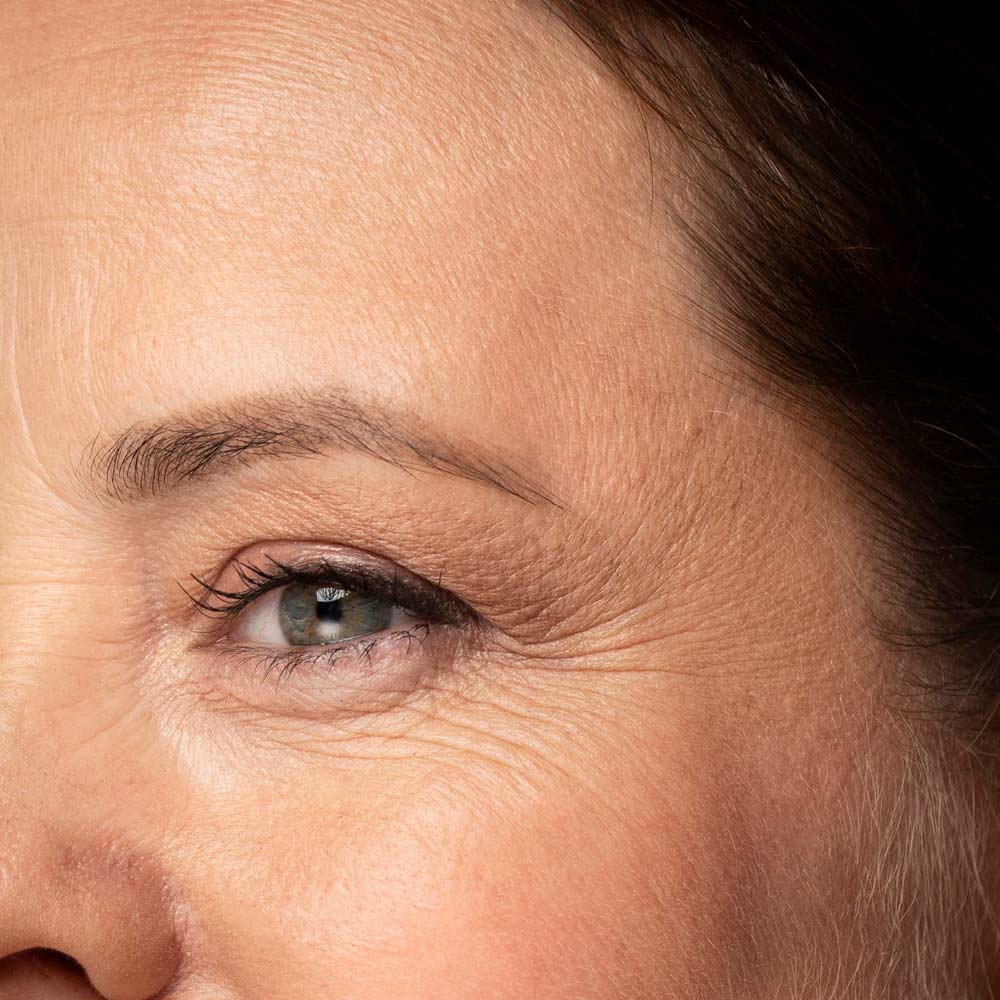
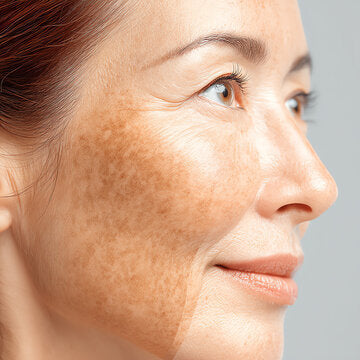
Mature skin does not only need “more moisture.” It often needs smarter moisture. With age and hormonal change, skin can become drier, thinner-feeling, less elastic, slower to recover, and more reactive. Menopause-related estrogen decline is associated in dermatology literature with changes in collagen, elasticity, hydration, and barrier comfort. This is why the best night cream for mature skin should be built around multiple needs at once.
For women in perimenopause, menopause, or post-menopause, the skin may feel inconsistent: dry one week, reactive the next, dull after poor sleep, or suddenly less tolerant of actives that once worked well. SUM OF ALL describes these visible shifts as dryness and dehydration, barrier fragility and slower recovery, dullness and uneven tone, texture roughness and fine lines, slower cell turnover, loss of firmness and elasticity, and thinning or volume loss. That framework is useful because it shows why a single-ingredient approach is rarely enough.
A stronger overnight moisturizer for mature skin should help skin feel replenished without overwhelming it. That usually means fragrance-free design, layered hydration, barrier-supportive lipids, gentle renewal, and ingredients that support visible firmness over time.
Signs Your Current Night Cream Is Not Doing Enough
A night cream can feel pleasant and still fall short. The clearest sign is that your skin feels better for an hour but tight again by morning. That pattern usually suggests the formula is masking dryness instead of helping the skin retain water. Another sign is uneven tolerance: your skin stings when you apply actives, flushes easily, or feels rough even though you moisturize every night.
- You wake up with tightness, flakes, or dullness despite applying a generous amount.
- Fine lines look more etched in the morning, especially around the mouth, cheeks, or eyes.
- Your skin looks shiny from product but still feels dehydrated underneath.
- Retinol or exfoliating products make your skin feel irritated rather than renewed.
- Your complexion looks less even, less bouncy, or slower to recover after stress or poor sleep.
A dermatologist perspective: persistent dryness is not always a sign that you need a heavier cream. Sometimes you need a better-balanced cream. A formula that combines humectants, lipids, and renewal support can be more effective than a very occlusive formula that lacks barrier strategy.
The Four Types of Night Creams
| Type | Best For | Limitation |
|---|---|---|
| Basic occlusive night cream | Temporary comfort, dryness from weather, simple routines | May not improve texture, tone, barrier resilience, or fine lines |
| Barrier repair moisturizer | Compromised, reactive, dry, or sensitive-feeling skin | May not provide enough visible renewal for mature skin concerns |
| Retinol night cream | Fine lines, uneven texture, dullness, visible signs of photoaging | Can irritate if not paired with replenishing ingredients or delivered gently |
| Deep replenishment night cream | Mature, dry, hormonally changing skin needing hydration, barrier support, and renewal | Requires thoughtful formulation; richer is not automatically better |
The most complete category is the deep replenishment night cream because it combines the logic of the other three. It cushions like a comfort cream, supports the barrier like a repair moisturizer, and, when well formulated, includes actives that help refine the look of texture and lines over time.
Best Ingredients in a Deep Replenishment Night Cream
1. Humectants: Water Binding for Overnight Cushion
Humectants attract and hold water in the outer layers of the skin. Common examples include glycerin, hyaluronic acid, beta-glucans, tremella mushroom polysaccharides, and algae-derived polysaccharides. They are especially important in an overnight moisturizer because they help skin feel plumper and more flexible by morning.
2. Barrier Lipids: Ceramides, Fatty Acids, Cholesterol, and Plant Oils
Barrier lipids help reduce water loss and improve comfort. Ceramides are particularly well studied for barrier support, but elegant formulas may also use fatty acids, cholesterol-like lipids, squalane, and nutrient-rich botanical oils. Tsubaki oil, used in Japanese beauty traditions, is valued for a soft, replenishing finish and fatty acid content. A barrier repair moisturizer should make skin feel less tight, less rough, and less reactive over time.
3. Encapsulated Retinol: Renewal with Better Control
Retinol is a vitamin A derivative used in skincare to improve the appearance of fine lines, uneven texture, dullness, and photoaging. The challenge is tolerability. Retinoids can cause dryness, peeling, and irritation, particularly in skin that is already dry or hormonally sensitive. Encapsulation is a delivery strategy designed to protect the active, release it more gradually, and improve the user experience.
An encapsulated retinol cream is not automatically gentle, but it gives formulators more control. The best versions pair retinol delivery with barrier support, hydration, and soothing ingredients. This matters for mature skin because visible renewal is valuable, but only if the skin can tolerate the routine consistently.
4. Peptides: Support for Visible Firmness
Peptides are short chains of amino acids that can act as signaling ingredients in cosmetic formulas. In premium skincare, they are commonly used to support the look of firmness, smoothness, and elasticity. They are not a replacement for prescription dermatology, but they can be valuable in a night cream for mature skin because firmness, texture, and hydration concerns often overlap.
5. Japanese Hydration Technologies: Sacran, Tsubaki, and Algae Polysaccharides
Japanese-inspired hydration technologies often focus on water binding, softness, and barrier comfort. Sacran, a large algae-derived polysaccharide, is known in cosmetic ingredient literature for exceptional water-binding behavior. Tremella mushroom, another East Asian skincare-inspired ingredient, forms a flexible hydration film that can leave skin feeling cushioned rather than greasy. These technologies are useful because they support the “well-rested” look consumers want from an overnight moisturizer.
6. Brightening and Tone-Support Ingredients
Mature skin often shows uneven tone and dullness alongside dryness. Ingredients such as niacinamide, vitamin C derivatives, licorice, pea bioactives, and botanical brighteners can support a more even-looking complexion. In a night formula, tone-support ingredients should be balanced so they do not compete with retinol or increase irritation.
Premium Competitor Comparison
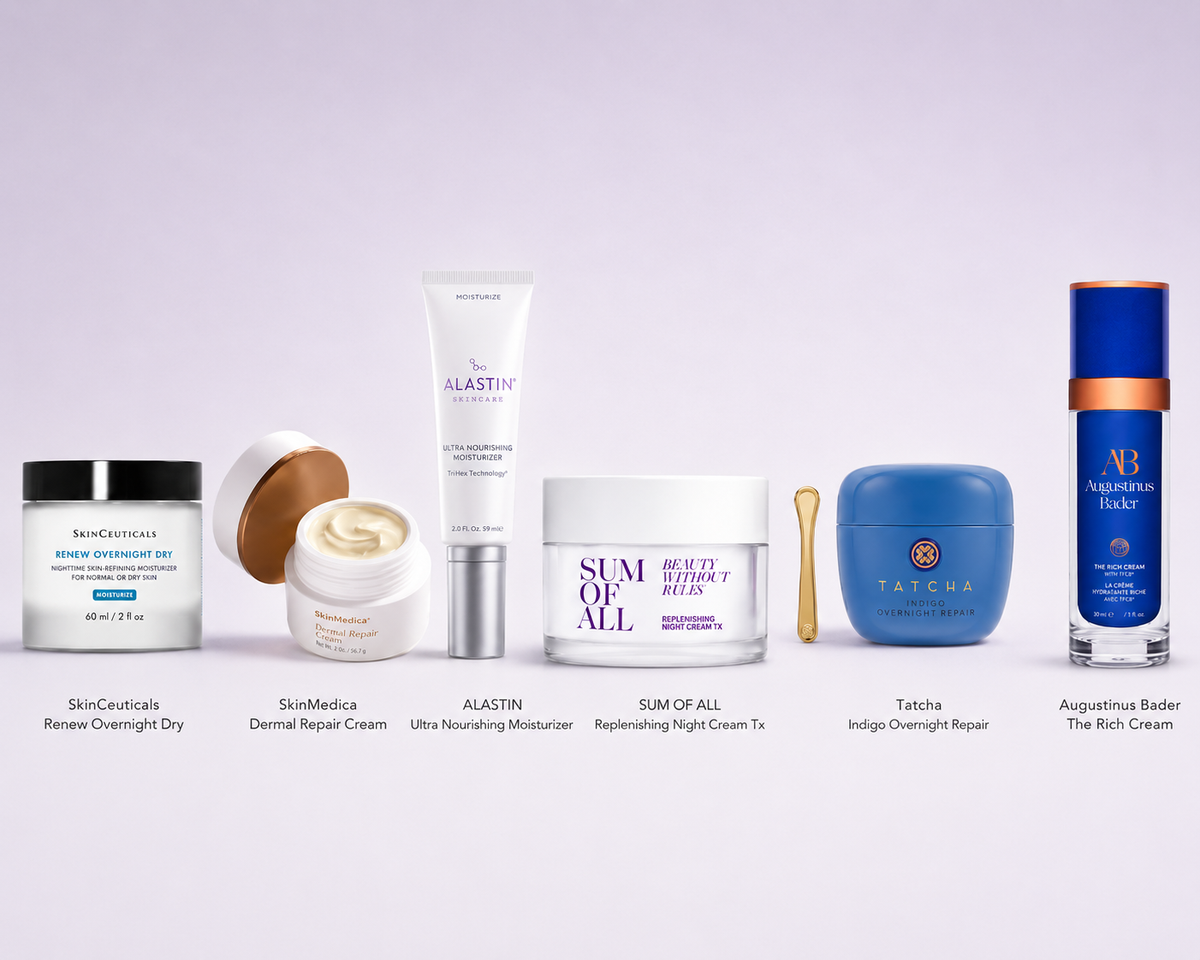
Premium night creams often fall into one of several positioning territories. Some focus on dermatologist-led correction, some on luxury sensorial experience, and others on biotech signaling or post-procedure recovery. For SEO and consumer education, the key is to explain how to compare them by function rather than brand prestige alone.
| Brand/Category | Typical Strength | What to Check Before Buying |
|---|---|---|
| SkinCeuticals-style corrective night formulas | Dermatology credibility, antioxidants, corrective actives | Whether it provides enough barrier replenishment for dry or hormonal skin |
| SkinMedica/Alastin-style professional skincare | Growth factor or peptide positioning, physician-channel authority | Whether the texture and active load match nightly tolerance |
| Tatcha-style luxury hydration | Elegant Japanese-inspired textures, hydration, sensorial experience | Whether there is enough clinical renewal support for fine lines and tone |
| Augustinus Bader-style biotech luxury | Premium repair narrative, peptide/signaling positioning | Whether claims are backed by the type of data you value |
| Dermstore/Byrdie/Healthline recommended moisturizers | Helpful discovery and editorial comparisons | Whether the product is designed for mature, dry, hormonally changing skin specifically |
A true deep replenishment night cream should score well across five questions: Does it replenish water? Does it support the barrier? Does it improve visible texture? Does it support firmness? Does it remain tolerable enough for consistent use?
Dermatologist Perspective: The Formula Should Match Skin Tolerance
Dermatologists often emphasize consistency over intensity. A powerful active is only useful if the patient or consumer can use it regularly without cycling through irritation. This is especially relevant for a night cream for menopause or perimenopause, when skin may be more dryness-prone or reactive. A formula that pairs renewal with replenishment is often more realistic than a harsh active layered under a separate basic moisturizer.
For beginners, start retinol-containing night creams slowly: two to three nights per week, then increase as tolerated. Apply sunscreen every morning. Avoid combining multiple strong exfoliants, retinoids, and harsh scrubs in the same routine unless guided by a dermatologist. Those who are pregnant, breastfeeding, using prescription treatments, or managing a skin condition should ask a qualified clinician before using retinoids.
SUM OF ALL Replenishing Night Cream Tx
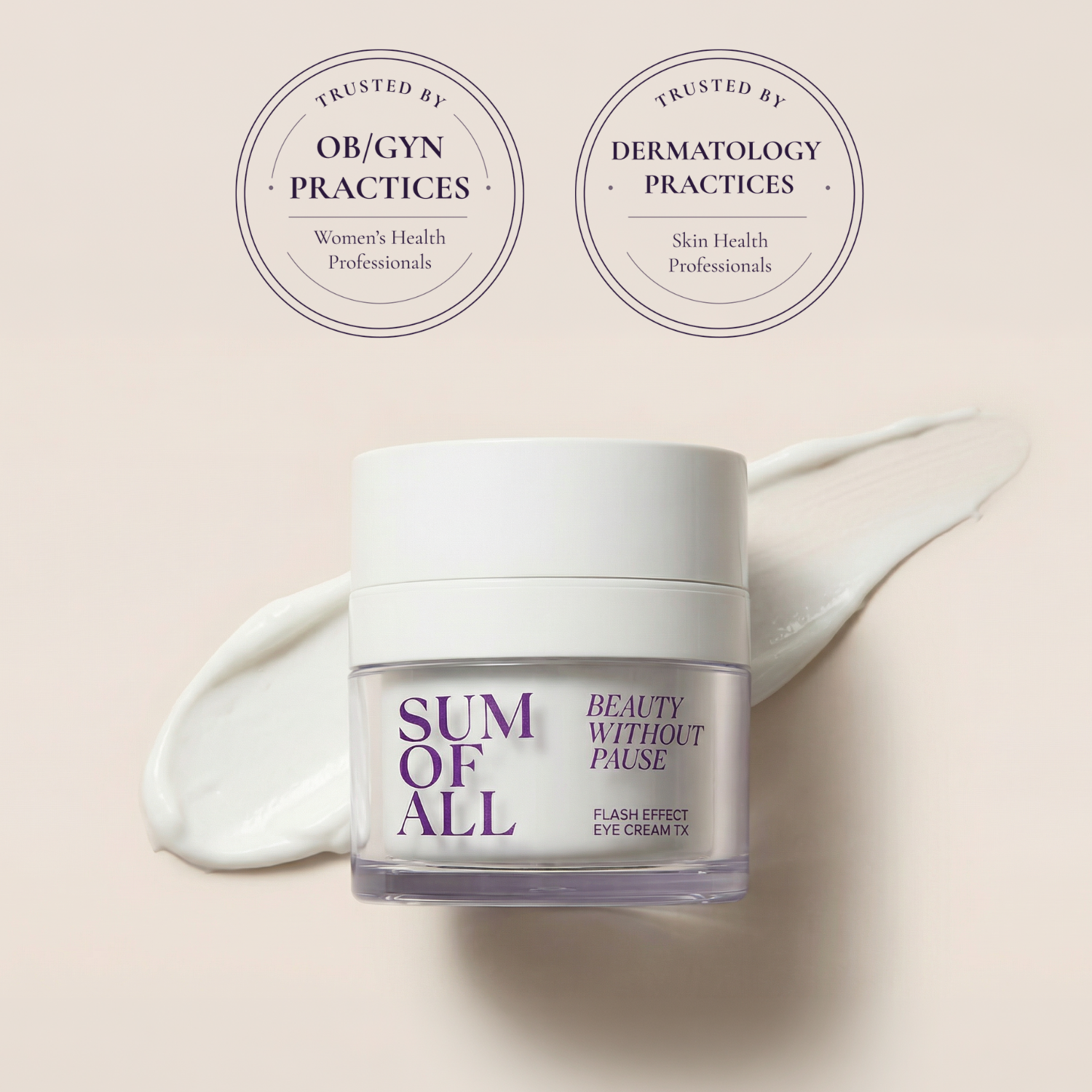
SUM OF ALL Replenishing Night Cream Tx is positioned as a deep replenishment night cream for hormonally changing skin. It is designed for the visible effects of perimenopause, menopause, and post-menopause: dryness, dullness, uneven tone, texture roughness, fine lines, slower recovery, and reduced resilience. Rather than treating mature skin as simply “older,” the formula is built around the idea that hormonal skin can be less predictable and needs adaptive overnight support.
The product combines encapsulated targeted retinol, a Japanese Replenishment Complex, Japanese Angelica Root plus pea peptides, and SUM OF ALL’s AP² Longevity Platform. The brand describes AP² as a patent-pending blend of adaptogens, phytoestrogens, and peptides created to support hydration, visible structure, and resilience during hormonal change. In the SUM OF ALL collection, AP² is positioned as the foundation that helps active ingredients work in greater harmony with skin.
Key Technologies in the Formula
| Technology | Role in the Formula |
|---|---|
| Encapsulated Targeted Retinol | Supports overnight renewal, smoother-looking texture, and refined lines with controlled delivery. SUM OF ALL reports up to 99.5% retinol absorption into skin within 6 hours in supporting testing. |
| Japanese Replenishment Complex | Includes sacran, a Japanese algae known for water binding, plus tsubaki oil to support softness, suppleness, and barrier comfort overnight. |
| Japanese Angelica Root + Pea Peptides | Helps support tone clarity and luminosity for a brighter, more even-looking complexion. |
| AP² Longevity Platform | A patent-pending blend of adaptogens, phytoestrogens, and peptides designed to support skin through hormonal change. |
Clinical Results
According to SUM OF ALL’s brand flipbook, Replenishing Night Cream Tx was evaluated in a third-party, dermatologist-supervised independent study of 30 women ages 40-65 in an ICH-GCP certified lab. The study measured hydration, barrier strength, dark spots, wrinkle length, and consumer-perceived improvements over 28 nights.
- +31% more deep skin hydration after 28 days.
- 27% stronger skin barrier as reported in the brand study materials.
- 17% reduction in dark spot area.
- 14% reduction in wrinkle length, with best-responder claims reported separately in the brand materials.
- 83% saw visible improvement in hydration and 83% reported softer skin.
- 100% tolerance with no adverse reactions in the study materials.
Source note: clinical claims above are brand-provided from SUM OF ALL flipbook dated 7-1-2026. Use exact substantiation language and required disclaimers on final webpages. Individual results may vary.
How It Compares to a Standard Retinol Night Cream
A standard retinol night cream often focuses mainly on cell turnover and visible wrinkle improvement. SUM OF ALL Replenishing Night Cream Tx is more accurately framed as a replenishing retinol night treatment because the retinol is paired with hydration and barrier-supportive technologies. That distinction is important for SEO and consumer education: the product is not just “retinol in a cream.” It is an overnight moisturizer designed to restore what dry, mature, hormonally changing skin gradually loses.
Buying Guide: How to Choose the Best Night Cream for Mature Skin
- Choose by skin behavior, not age alone. Dryness, sensitivity, dullness, and slow recovery matter more than your birthday.
- Look for layered hydration. A strong formula should include humectants plus ingredients that reduce water loss.
- Prioritize barrier support. Barrier repair moisturizer benefits are essential if your skin feels tight, reactive, or depleted.
- Use retinol intelligently. Encapsulated retinol can be a good option when the formula also supports hydration and tolerance.
- Avoid unnecessary irritants. Fragrance-free formulas are often preferable for mature or hormonally sensitive skin.
- Evaluate proof. Look for clinical testing, dermatologist supervision, instrument measurements, and clear disclaimers.
FAQ: Deep Replenishment Night Cream
What is a deep replenishment night cream?
It is an overnight moisturizer designed to replenish hydration, support the skin barrier, improve comfort, and help visible texture and fine lines look smoother over time.
Is a deep replenishment night cream the same as a barrier repair moisturizer?
Not exactly. A barrier repair moisturizer focuses mainly on moisture retention and barrier comfort. A deep replenishment night cream should also support visible renewal, tone, and firmness.
Is this type of cream good for menopause skin?
It can be, especially when it addresses dryness, barrier fragility, dullness, texture, and reduced resilience without relying on harsh actives alone.
Should I use retinol every night?
Not at first. Begin two to three nights per week and increase as tolerated. Daily sunscreen is important when using retinoids.
Can I use a resurfacing serum with a retinol night cream?
Use caution. Many people alternate resurfacing nights and retinol nights to reduce irritation. Sensitive skin should start slowly.
What makes SUM OF ALL Replenishing Night Cream Tx different?
It combines encapsulated retinol, Japanese hydration technologies, tone-support ingredients, and the AP² Longevity Platform in a formula designed for hormonally changing skin.
Is a richer night cream always better for dry skin?
No. A very rich cream can feel good but may not solve dehydration. Look for humectants, lipids, and barrier-supportive ingredients in a balanced formula.
When will I see results?
Hydration and comfort can feel noticeable quickly, while texture, tone, and fine-line improvements usually require consistent use over several weeks. Product-specific results depend on the formula and the clinical data behind it.
Conclusion
The best deep replenishment night cream is not defined by how heavy it feels. It is defined by how intelligently it helps skin recover overnight. For mature skin, dry skin, and hormonally changing skin, the strongest formulas combine water-binding hydration, barrier repair, visible renewal, tone support, and ingredients that help skin look firmer and more resilient over time.
SUM OF ALL Replenishing Night Cream Tx fits this modern definition by pairing encapsulated retinol with Japanese-inspired hydration technologies, peptides, barrier-supportive nourishment, and the AP² Longevity Platform. The result is an overnight moisturizer positioned not just to soften skin, but to help restore the look of smoother texture, improved tone clarity, deeper hydration, and a more well-rested complexion by morning.
For consumers comparing premium skincare, the question is not simply “Which night cream is most luxurious?” The better question is: which formula supports the way my skin is changing now? For women navigating dryness, dullness, fine lines, and shifting tolerance, a true deep replenishment night cream can become the anchor of a smarter nighttime routine.
Sources
- Circadian Rhythm and the Skin: A Review of the Literature
- Use of Retinoids in Topical Antiaging Treatments: A Focused Review
- Clinical significance of ceramide-containing formulations for water retention and barrier function
- Topical Peptide Treatments with Effective Anti-Aging Results
- Managing Menopausal Skin Changes: A Narrative Review of Skin Quality Changes
Revealing the Potential Use of Macro and Microalgae Compounds in Skin Barrier Repair
Explore next: Replenishing Night Cream Tx · the 7 visible shifts of menopause · the science behind our formulas · shop night-time skincare · night cream FAQs
Read more

Estrogen and Collagen: The Hidden Connection Estrogen and collagen are linked at the cellular level: estrogen binds to receptors on dermal fibroblasts and switches on the genes that make collage...
Best Serums for Aging Skin: Expert Guide (2026) The best serum for aging skin combines a clinically proven active — retinoids, peptides or vitamin C — with a delivery system that actually penetr...