




Why Your Skin Feels Suddenly Dry During Menopause
If your skin feels suddenly dry — tight, rough, or uncomfortable in ways it never did before — you’re not imagining it. For many women, skin dryness is one of the earliest and most persistent symptoms of perimenopause and menopause.
What makes this change especially frustrating is how unexpected it can feel. Products that once worked stop delivering results. Skin that was balanced for decades suddenly feels fragile.
Dry skin during menopause isn’t about using the “wrong” moisturizer. It’s about hormonal change — and understanding what’s happening beneath the surface.
Is Dry Skin a Common Menopause Symptom?
Yes. Skin dryness is one of the most common menopause symptoms, and it often begins during perimenopause — years before menopause is officially diagnosed.
As estrogen levels fluctuate and decline, the skin’s ability to retain moisture changes. This can affect the face, body, scalp, and even intimate skin, making dryness a whole-body experience rather than a localized concern.
For a broader overview of menopause symptoms and stages, you can explore our guide to menopause explained.
Why Does Skin Become Dry During Menopause?
Dryness during menopause is primarily driven by hormonal shifts, particularly declining estrogen.
Estrogen supports:
- Natural oil production
- Skin barrier function
- Water retention within the skin
When estrogen levels fall, the skin produces fewer lipids and loses moisture more easily. The barrier that once kept skin comfortable and resilient becomes less efficient, allowing water to escape and irritants to penetrate more easily.
We explore the hormonal mechanisms behind this in depth in How Hormonal Changes During Menopause Affect Your Skin.
---------------------------------------------------------------------------------------------------------
Signs Your Dry Skin Is Hormonal
Menopausal dry skin often feels different from seasonal or environmental dryness.
You may notice:
- Tightness that returns quickly after moisturizing
- Flakiness without obvious irritation
- A dull or rough texture
- Increased sensitivity to products
- Dry patches that seem resistant to usual care
These changes can appear suddenly, even if you’ve never had dry skin before.
Perimenopause vs. Menopause: Why Dryness Can Feel Inconsistent
During perimenopause, estrogen levels fluctuate unpredictably. This can cause skin dryness to come and go — improving for weeks, then returning without warning.
Once menopause is reached, estrogen levels remain consistently lower, and dryness often becomes more persistent.
This inconsistency is one reason menopausal skin can feel confusing and hard to manage without understanding the underlying hormonal context.
Why Traditional Skincare Often Stops Working
Many traditional skincare routines are designed for hormonally stable skin. During menopause, those assumptions no longer apply.
Aggressive exfoliation, high-strength actives, or overly stripping cleansers can worsen dryness by further compromising the skin barrier.
Menopausal dry skin responds best to:
- Barrier-supportive care
- Thoughtful hydration
- Formulas that address skin function, not just surface symptoms
This isn’t about doing more — it’s about doing what’s appropriate for hormonally changing skin.
Supporting Dry Skin During Menopause
While hormonal changes can’t be stopped, dryness can often be managed with a more supportive approach.
Helpful strategies include:
- Using gentle, non-stripping cleansers
- Prioritizing barrier repair and hydration
- Avoiding overuse of harsh exfoliants
- Supporting overall skin comfort rather than chasing quick fixes
Lifestyle factors like hydration, sleep, and stress management also influence how skin experiences dryness during this stage.
When to Talk to a Healthcare Provider
If dryness is severe, widespread, or affecting quality of life — particularly in intimate areas — it’s worth discussing with a healthcare provider.
Medical guidance can help determine whether additional support, such as topical treatments or hormonal options, may be appropriate.
Frequently Asked Questions About Dry Skin During Menopause
Is dry skin a sign of menopause?
Yes. Dry skin is a common sign of perimenopause and menopause and is often linked to declining estrogen levels that affect the skin’s ability to retain moisture.
Can dry skin start before menopause?
Yes. Many women experience dry skin during perimenopause, sometimes years before menopause is officially reached.
Why does my moisturizer stop working during menopause?
Hormonal changes can weaken the skin barrier and reduce natural oil production, meaning products that once worked may no longer be sufficient for menopausal skin needs.
Will menopausal dry skin improve over time?
For some women, dryness improves as the body adapts. For others, it requires ongoing supportive care. Understanding the hormonal context helps guide more effective long-term strategies.
What This Symptom Is Telling You
Dry skin during menopause isn’t a personal failure or a lack of effort. It’s information.
It’s your skin responding to a new internal environment — one shaped by hormonal change, not age alone.
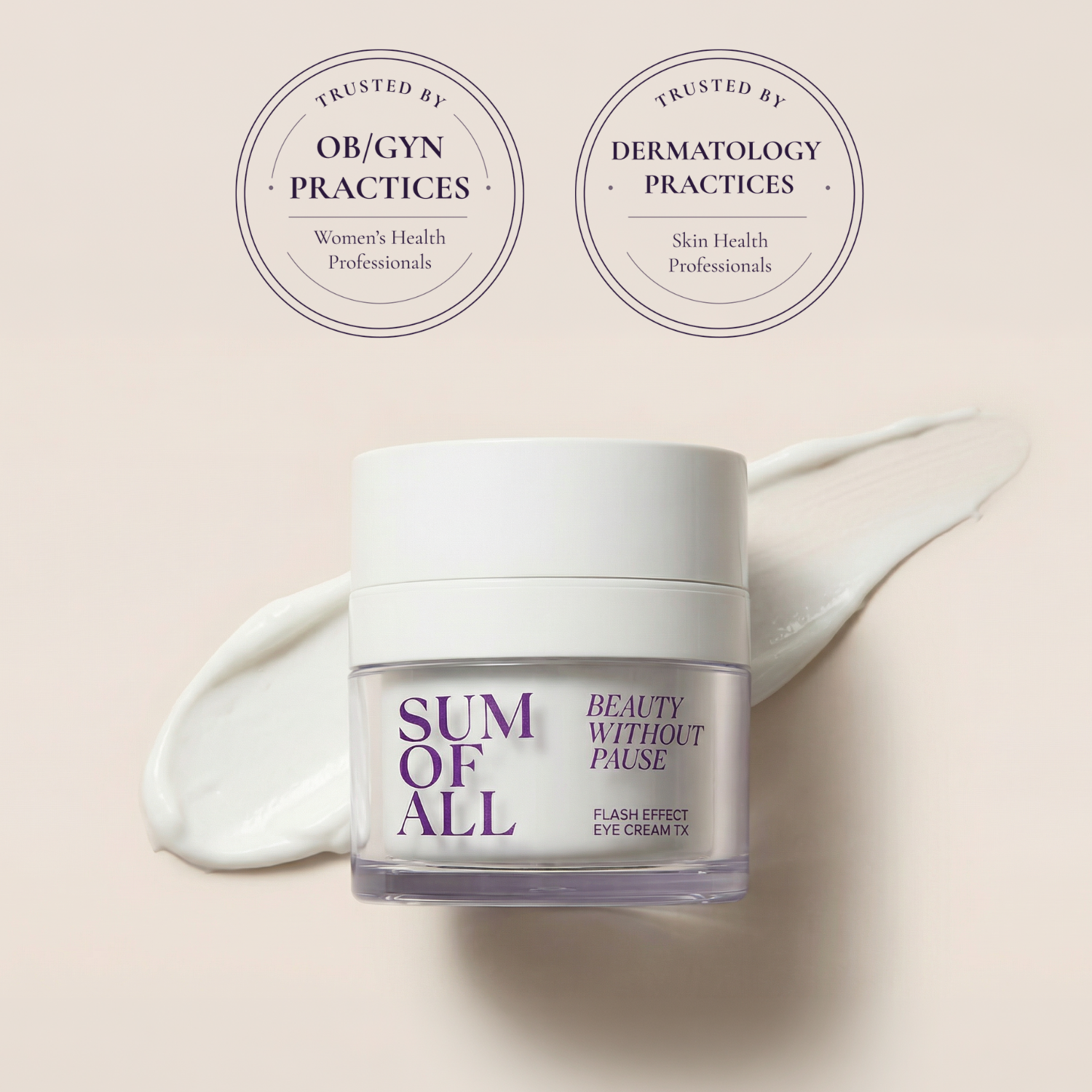
At SUM OF ALL, we believe that when women understand why symptoms appear, they can care for themselves with clarity rather than frustration. Dry skin isn’t something to fight — it’s something to support intelligently.
Read more
Skin barrier repair is the process of restoring your skin's outermost protective layer — the stratum corneum — after it's been weakened by environmental stress, hormonal changes, or over-exfoliat...
Night cream for aging skin is a targeted overnight treatment that replenishes moisture, supports collagen production, and works with your body's natural repair cycle while you sleep. It is not ...