





Estrogen and Collagen: The Hidden Connection
Estrogen and Collagen: The Hidden Connection
Estrogen and collagen are linked at the cellular level: estrogen binds to receptors on dermal fibroblasts and switches on the genes that make collagen. When estrogen falls during perimenopause and menopause, synthesis slows and women lose around 30% of their skin collagen in the first five years, then roughly 2% each year after that. This is the single biggest driver of midlife skin change.
Table of Contents
- How Estrogen Regulates Collagen Production
- What Happens to Collagen When Estrogen Drops
- The First Five Years: Rapid Collagen Loss
- Can HRT Restore Lost Collagen?
- Topical Ingredients That Mimic Estrogen
- Building a Collagen-Protection Routine
- Frequently Asked Questions
How Estrogen Regulates Collagen Production
Skin is an estrogen-sensitive organ. Fibroblasts in the dermis carry estrogen receptors (ERα and ERβ), and when estrogen binds, it switches on the genes responsible for producing type I and type III collagen — the structural proteins that give skin its firmness.
According to the North American Menopause Society (NAMS), estrogen does several things at once for the skin matrix:
- Stimulates fibroblasts to synthesize new collagen fibers
- Increases hyaluronic acid production, which holds water in the dermis
- Boosts skin thickness and elastin quality
- Improves wound healing and barrier function
- Reduces the activity of collagen-degrading enzymes (MMPs)
In other words, estrogen is not just a reproductive hormone with side effects on skin — it's an active regulator of dermal architecture. When circulating estrogen is plentiful, fibroblasts work efficiently and collagen turnover stays balanced.
This explains why women in their twenties and thirties generally have plump, resilient skin without intervention, and why the same skin can change rapidly within a few short years of menopause. For more on the underlying biology, see our collagen and menopause guide area.
What Happens to Collagen When Estrogen Drops
When estrogen falls, fibroblast activity slows and the skin loses its primary signal to make new collagen. At the same time, MMP activity increases, meaning existing collagen is broken down faster. The dermis effectively goes from a building site to a demolition site.
The visible signs follow a predictable pattern:
- Skin feels thinner and drier within months of hormonal change
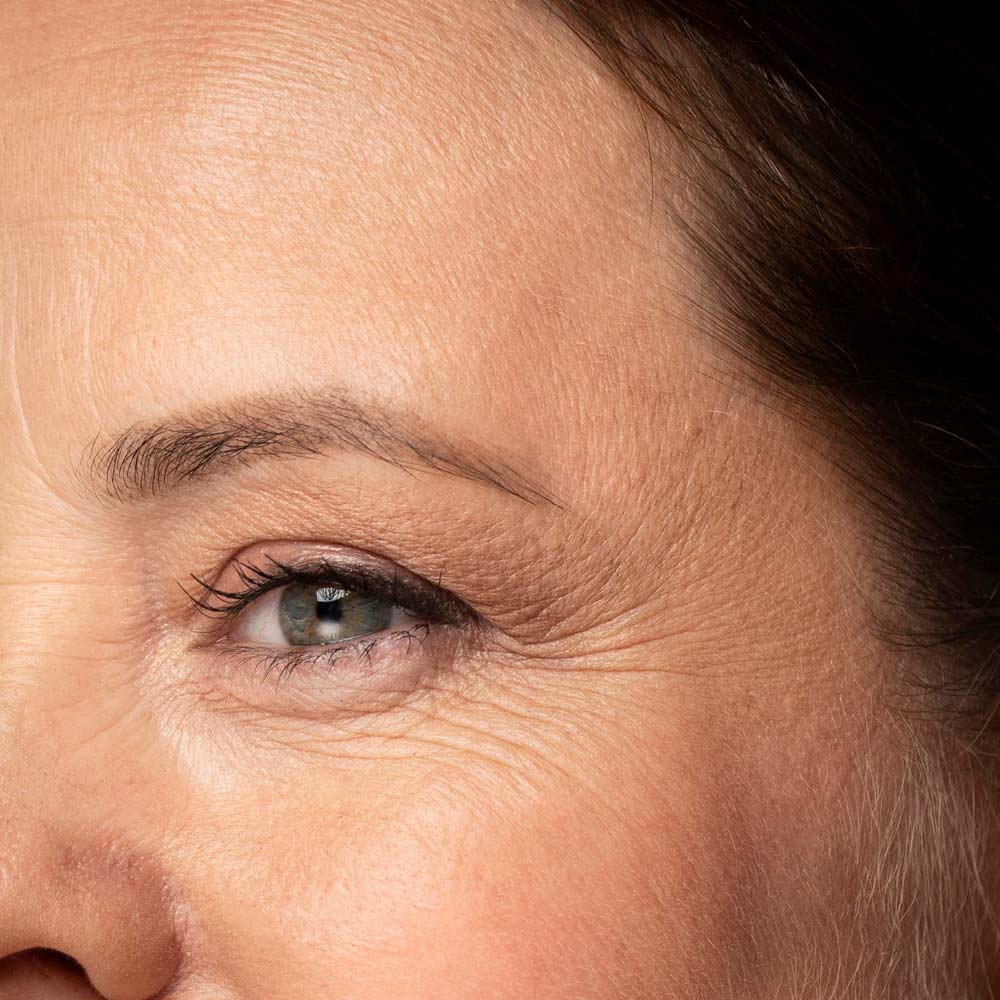
- Fine lines deepen, particularly around the eyes and mouth
- The face loses volume in the cheeks and temples
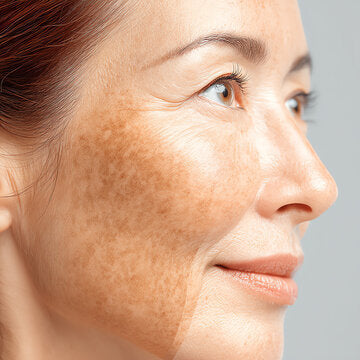
- Skin tone becomes uneven and recovery from redness slows
- Wounds and blemishes take noticeably longer to heal
Crucially, this is not the same as photoaging from sun exposure, although the two often overlap. According to the AAD, photoaging damages collagen from the outside in, while estrogen-related collagen loss happens from the inside out, driven by the absence of a hormonal signal the skin has relied on for decades.
It's also not a slow, linear decline. The drop is steepest in the years immediately surrounding menopause, which is why so many women describe their skin "changing overnight" in their late forties or early fifties.
The First Five Years: Rapid Collagen Loss
The first five years post-menopause are the most consequential for skin collagen. According to the British Menopause Society, women lose approximately 30% of skin collagen in the first five years after menopause, then continue at about 2% per year for the next two decades.
| Stage | Approximate Age | Collagen Change | What You Notice |
|---|---|---|---|
| Late perimenopause | 45–50 | Synthesis slowing, MMPs rising | Drier skin, finer lines, dullness |
| Early menopause (years 1–5) | 50–55 | Up to 30% collagen lost | Visible volume loss, deeper lines, thinner skin |
| Established menopause (years 5–15) | 55–65 | ~2% loss per year | Slower healing, laxity, more pronounced creases |
| Post-menopause (15+ years) | 65+ | Cumulative thinning | Crepiness, fragility, slower turnover |
The takeaway isn't that skincare becomes pointless after fifty — it absolutely doesn't. The takeaway is that the window before and during those first five years is the most valuable time to invest in collagen protection.
Can HRT Restore Lost Collagen?
Hormone replacement therapy (HRT) is the most direct way to address estrogen-related collagen loss, because it reintroduces the hormonal signal fibroblasts have lost. According to Harvard Health, several controlled studies show that women on systemic HRT have measurably thicker skin and higher collagen content than untreated women of the same age, particularly when therapy is started early in menopause.
The evidence is consistent on a few points:
- HRT can slow the rate of collagen loss after menopause
- HRT started early appears more protective than HRT started a decade later
- Topical estrogen creams (where prescribed) can also improve skin thickness in localized areas
- HRT doesn't fully reverse decades of collagen decline, but it can stabilize the trajectory
That said, HRT is a clinical decision, not a cosmetic one. Whether HRT is right for any individual depends on her full medical history, symptoms, and risk profile. That conversation belongs with a GP or menopause specialist — not a skincare brand.
For women who can't or choose not to take HRT, topical and lifestyle strategies become even more important. Read our companion piece on estrogen and skin for the full picture.
Topical Ingredients That Mimic Estrogen
Certain plant-derived compounds, called phytoestrogens, can bind weakly to estrogen receptors in the skin and produce mild collagen-supportive effects without the systemic action of HRT.
According to research summarized by Cleveland Clinic, ingredients with the strongest evidence for collagen support around menopause include:
- Genistein and daidzein (soy isoflavones) — bind ERβ receptors, shown to improve skin thickness in post-menopausal studies
- Resveratrol — antioxidant with mild estrogenic activity and direct fibroblast stimulation
- Retinoids (retinol, retinaldehyde) — the most evidence-backed topical for stimulating new collagen
- Peptides — signal fibroblasts to produce collagen
- Vitamin C — essential cofactor for collagen synthesis
- Niacinamide — strengthens the barrier, reduces MMP activity
Our AP2 Complex was formulated specifically for this stage of skin life, combining peptide signalling with antioxidant protection. For overnight repair, the Collagen Boosting Serum delivers a high concentration of collagen-supportive actives during the hours when skin renewal peaks.
For more on how these actives work together, see our guides to building a midlife skincare routine and how peptides support collagen.
Building a Collagen-Protection Routine
A collagen-protection routine for midlife skin is built around three principles: stimulate new collagen, protect existing collagen, and support the dermal environment. You don't need a twelve-step regimen.
A simple, evidence-led structure:
Morning 1. Gentle cleanser 2. Vitamin C serum (antioxidant, collagen cofactor) 3. Peptide moisturizer or AP2 Complex 4. Broad-spectrum SPF 30 or higher (non-negotiable)
Evening 1. Cleanser 2. Retinoid (start low, build slowly) or Overnight Resurfacing Serum 3. Collagen Boosting Serum 4. Replenishing Night Cream to seal in actives
The principle is that the relationship between estrogen and collagen doesn't have to be a one-way decline. You can't replace estrogen topically, but you can replicate many of its downstream effects on fibroblasts using the right combination of peptides, antioxidants, and barrier-supportive ingredients.
Consistency matters more than complexity. The women whose skin ages most gracefully through menopause are the ones who started early, used SPF every day, and stuck with a small number of effective actives over years.
Frequently Asked Questions
Does estrogen really affect skin collagen that much? Yes. Estrogen is one of the primary regulators of collagen synthesis in the skin. Studies consistently show post-menopausal women have measurably less collagen than pre-menopausal women of similar age, and the decline accelerates sharply at menopause.
How much collagen do you lose at menopause? Research suggests women lose around 30% of skin collagen in the first five years after menopause, then approximately 2% each year for the next twenty years. The early years are by far the steepest drop.
Will HRT reverse wrinkles? HRT can slow collagen loss and improve skin thickness, particularly when started early in menopause. It doesn't fully reverse existing wrinkles but can stabilize the trajectory. HRT is a medical decision and should be discussed with a GP.
Are phytoestrogens in skincare safe? Topical phytoestrogens like soy isoflavones and resveratrol bind weakly to skin estrogen receptors and have a strong safety record in cosmetic use. They don't produce systemic hormonal effects.
Can I rebuild collagen after menopause without HRT? You can't fully rebuild what's lost, but you can stimulate new collagen production with retinoids, peptides, and vitamin C, and you can protect existing collagen with daily SPF and antioxidants.
When should I start a collagen-protection routine? Ideally in your late thirties or early forties, before perimenopause begins. Starting early gives you the largest possible reserve of collagen heading into the steep menopausal decline. It's never too late, though — fibroblasts remain responsive into later life.
Is collagen loss the same as sun damage? No. Sun damage breaks down collagen from external UV exposure and can happen at any age. Estrogen-related collagen loss is hormonal and internal. Most midlife skin shows signs of both, which is why SPF and active skincare matter together.
Written by Stacey Berger. Reviewed by the Sum of All Editorial Team.
Read more
Best Collagen Supplements for Menopause (2026) The best collagen supplements for menopause are hydrolyzed Type I and III peptides taken at 10–15g daily, ideally paired with vitamin C. Most wome...
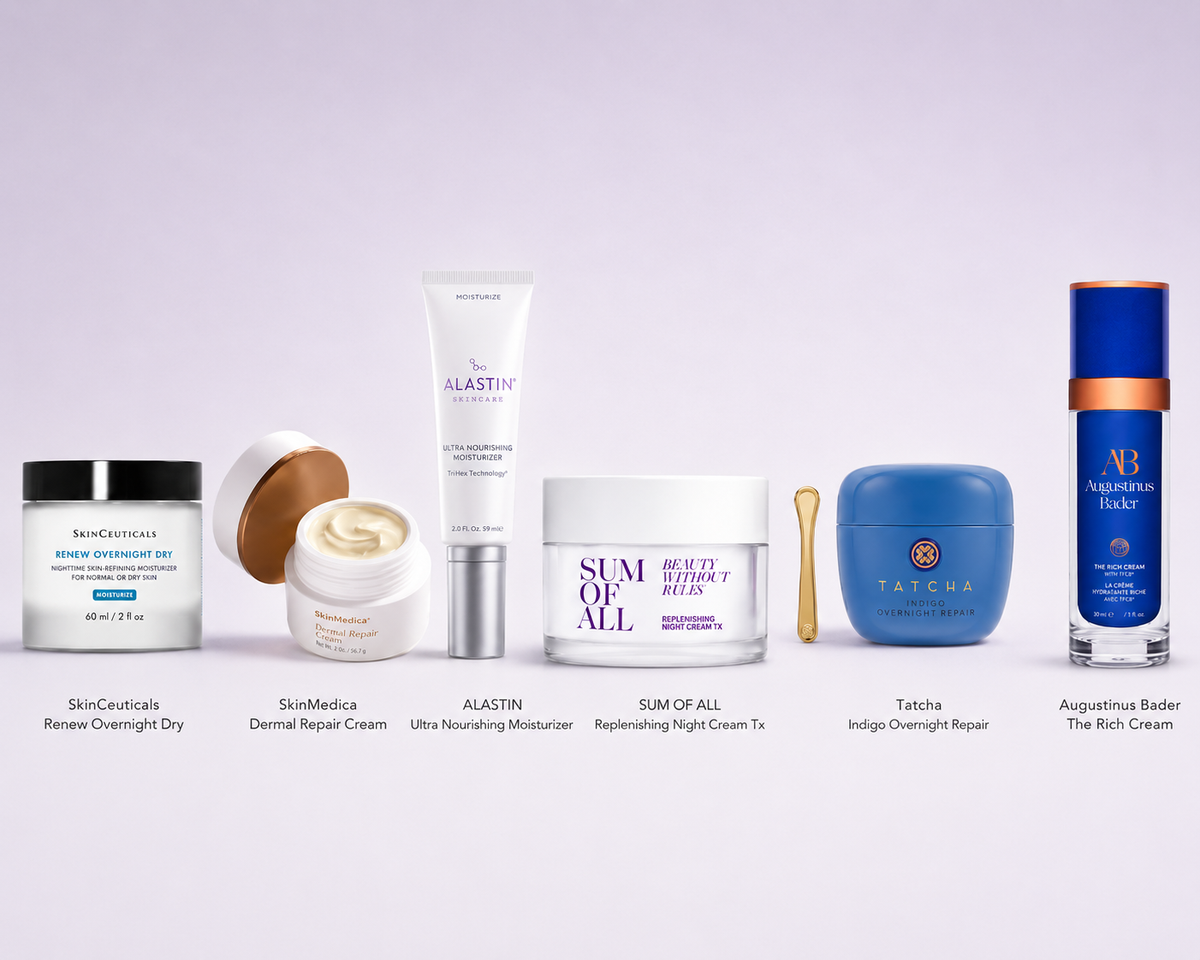
A deep replenishment night cream is designed to do much more than moisturize your skin overnight. The best formulas replenish lost moisture, strengthen the skin barrier, support collagen, and help ...