


Thinning Skin During Menopause: Causes and Fixes
Thinning Skin During Menopause: Causes and Fixes
Thinning skin menopause is the structural loss of collagen, elastin and dermal density driven by falling estrogen. It is not fully reversible, but it's absolutely improvable with peptides, phyto-estrogens, barrier-repair ingredients and daily SPF. Most women see meaningful changes in fragility and density within three to six months of consistent care.
Table of Contents
- Why Does Skin Thin During Menopause?
- How Collagen and Elastin Loss Causes Skin Thinning
- Is Thinning Skin Reversible After Menopause?
- Best Ingredients to Thicken Thinning Menopausal Skin
- Skincare Routine to Strengthen Thinning Skin
- Protecting Thin Skin From Bruising and Damage
- Frequently Asked Questions
Why Does Skin Thin During Menopause?
Skin thinning in menopause is driven primarily by the sharp decline in estrogen. Estrogen is one of the most important hormones for skin structure, hydration, and repair. It signals fibroblasts — the cells that build collagen and elastin — to keep producing the scaffolding that holds your skin firm and plump. When estrogen drops, that signal weakens and the scaffolding starts to break down faster than it can be rebuilt.
According to research summarized by the British Menopause Society, women lose around 30% of their skin's collagen in the first five years of menopause, then roughly 2% per year after that. This is why thinning skin menopause concerns often appear quite suddenly, seemingly overnight, rather than gradually.
The changes you may notice include:
- Skin that looks translucent, with veins more visible on the hands and chest
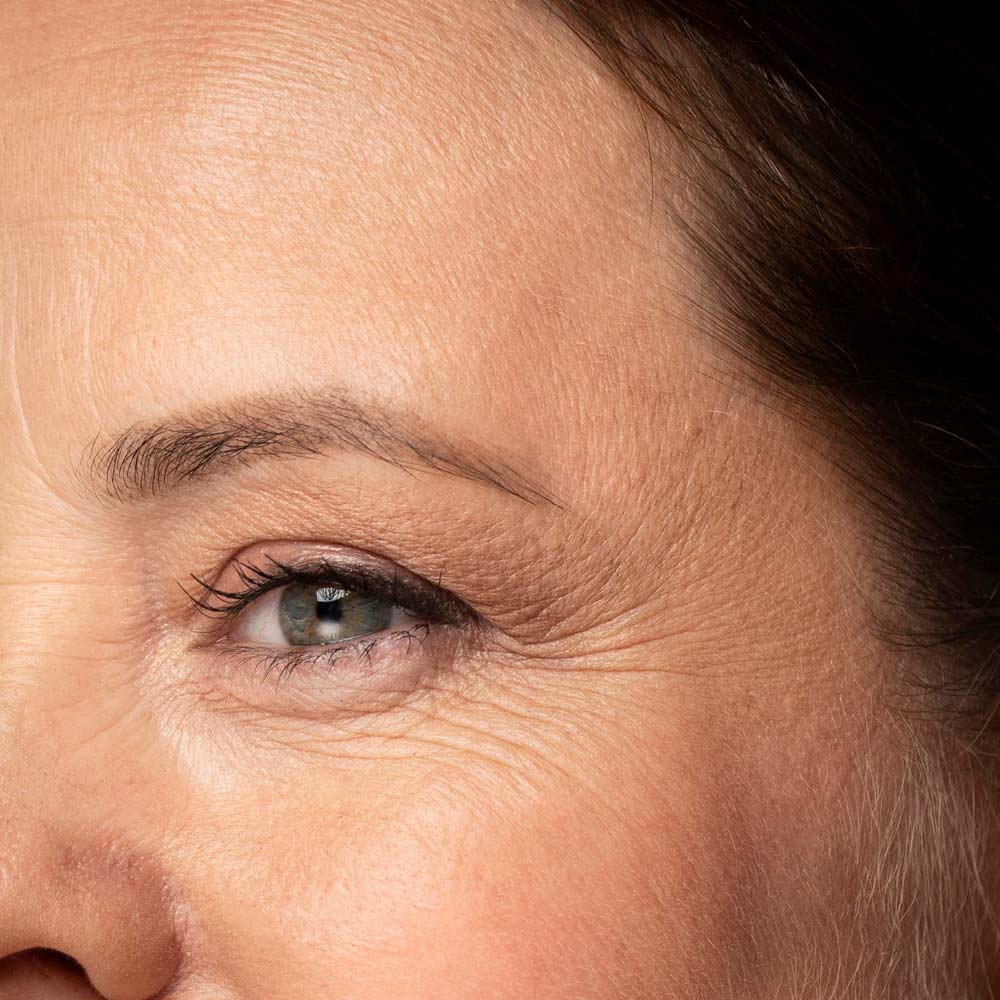
- A crepey, finely wrinkled texture on the forearms, eyelids, and décolletage
- Easy bruising from minor bumps that never used to mark you
- A dry, tight feeling that moisturizer alone doesn't seem to fix
- Slower healing of small cuts, scratches, and spots
None of this means your skin is failing. It means your skin is responding, predictably, to a hormonal shift. And once you understand the mechanism, you can work with it rather than against it.
How Collagen and Elastin Loss Causes Skin Thinning
Your skin has three main layers: the epidermis (the surface), the dermis (the thick middle layer where collagen and elastin live), and the subcutaneous fat below. According to the AAD, when we talk about thinning skin menopause, we're mostly talking about the dermis becoming thinner, less dense, and less elastic.
Collagen is the protein that gives skin its firmness and fullness; elastin is what allows it to snap back when stretched. Both are produced by fibroblasts, and both are highly estrogen-dependent. As estrogen falls, fibroblast activity slows, existing collagen fibers break down through glycation and oxidation, and new fibers aren't laid down quickly enough to replace them.
At the same time, the epidermis (the top layer) also becomes thinner and less able to hold on to water. This is why thinning skin and dryness so often arrive together. The skin barrier weakens, trans-epidermal water loss increases, and the lower dermis loses its plumping hyaluronic acid content.
The visible result is skin that looks less like a firm cushion and more like tissue paper laid over muscle and bone. Thinning skin is not a cosmetic problem; it is a structural one. Surface-level moisturizers alone rarely feel like enough — you need ingredients that actually speak to the fibroblasts. For more, see our deep dive on low estrogen skin.
Is Thinning Skin Reversible After Menopause?
Honestly? Fully reversing thinning skin after menopause isn't realistic. You can't un-do decades of collagen loss or restore your thirty-year-old dermis overnight. But you absolutely can thicken, strengthen, and densify menopausal skin, and the improvements can be genuinely visible within three to six months of consistent care.
According to the NAMS, studies on topical retinoids, peptides, and estrogen-mimicking botanicals demonstrate measurable increases in dermal thickness and collagen density in post-menopausal skin. HRT, where clinically appropriate and prescribed by a doctor, has also been shown to improve skin thickness. So the honest answer is this: your skin isn't frozen in decline. Fibroblasts remain responsive throughout life — they just need the right instructions.
What you can realistically expect with a committed routine:
- Weeks 1 to 4: Better hydration, less tightness, a calmer barrier, and reduced surface crepiness.
- Weeks 4 to 12: Smoother texture, a subtle plumping effect, and fewer fine lines where the skin was driest.
- Months 3 to 6: Visibly firmer skin, less translucency, slower bruising, and a more resilient feel.
- Months 6 and beyond: Meaningful improvements in dermal density that compound the longer you stay consistent.
The key word is consistent. Thinning skin doesn't respond to occasional effort. It responds to daily, gentle, repeated signals that tell your skin it's safe to rebuild.
Best Ingredients to Thicken Thinning Menopausal Skin
Not every "anti-aging" ingredient is right for fragile, thinning skin. Some popular actives are too harsh for a compromised barrier and can actually make the problem worse. According to the Cleveland Clinic, the ingredients below have the strongest evidence for rebuilding density without triggering irritation.
| Ingredient | What it does | Best for |
|---|---|---|
| Peptides (signal and carrier) | Instruct fibroblasts to produce more collagen and elastin | Rebuilding dermal density without irritation |
| Phyto-estrogens (e.g. genistein) | Gently mimic estrogen at the skin receptor level | Addressing the hormonal root cause topically |
| Bakuchiol | A gentler, plant-based retinol alternative | Skin that cannot tolerate traditional retinoids |
| Encapsulated retinal | Boosts cell turnover and collagen synthesis | Resilient menopausal skin, used at night |
| Niacinamide | Strengthens the barrier and reduces redness | Daily barrier support, morning and night |
| Hyaluronic acid (multi-weight) | Plumps and hydrates across multiple skin layers | Immediate comfort and crepiness reduction |
| Ceramides and fatty acids | Replace lipids a menopausal barrier is losing | Dry, tight, paper-feeling skin |
| Vitamin C (stable form) | Antioxidant protection and collagen cofactor | Brightening and structural support |
This is exactly the logic behind our AP2 Complex, which was formulated specifically for menopausal skin using a phyto-estrogen-led approach, and our Collagen Boosting Serum, which pairs signal peptides with supporting actives. If you're new to this category, our deep dive on peptides for aging skin breaks the science down in more detail.
Skincare Routine to Strengthen Thinning Skin
A routine for thinning skin menopause doesn't need to be long, but it does need to be deliberate. The goal is to layer hydration, active signalling, and barrier repair without overwhelming a fragile dermis.
| Step | Morning | Evening |
|---|---|---|
| 1. Cleanse | Cream or milk cleanser | Gentle double cleanse if wearing SPF |
| 2. Prep | Hydrating toner or essence | Hydrating toner or essence |
| 3. Treat | Vitamin C or peptide serum | Collagen Boosting Serum + AP2 Complex |
| 4. Moisturize | Rich ceramide moisturizer | Replenishing Night Cream |
| 5. Protect / Renew | SPF 30 or 50, every day | 2-3x weekly: Overnight Resurfacing Serum |
A few things to avoid if your skin is genuinely thin and reactive: high-strength glycolic acids, harsh physical scrubs, alcohol-heavy toners, and any routine that leaves your skin feeling tight or stinging. Thinning skin isn't asking for more exfoliation. It's asking for more support. For more on structuring an effective routine, see our menopause skincare routine guide and skincare over 40.
Protecting Thin Skin From Bruising and Damage
Once skin has thinned, day-to-day protection becomes just as important as the actives in your routine. The fragile capillaries sitting closer to the surface are what cause that frustrating easy bruising, and tiny tears from knocks, adhesive plasters, or even jewelry can take much longer to heal.
According to Harvard Health, UV damage is the single biggest accelerant of collagen breakdown. An SPF 30 to 50 worn daily, on face, neck, chest, and the backs of hands, is non-negotiable for menopausal skin. According to the Mayo Clinic, daily sunscreen is the most powerful, most affordable anti-thinning intervention you have.
Beyond sun protection:
- Keep skin well hydrated from the inside with plenty of water and oily fish or a quality omega-3 supplement
- Treat the backs of your hands and forearms with the same serums and moisturizers you use on your face
- Avoid very hot showers and baths, which strip lipids from an already-dry barrier
- Use a soft, clean towel and pat rather than rub dry
- Wear long sleeves for gardening, DIY, or any activity where you tend to pick up knocks
- Swap harsh soaps for a gentle, pH-balanced body wash
- Be gentle when removing plasters, tapes, or tight clothing
These feel like small things, but added together they meaningfully reduce the daily micro-damage that thinning skin struggles to repair. Protection isn't a substitute for treatment, and treatment isn't a substitute for protection — you need both. For deeper context on the hormonal side, see our companion piece on low estrogen skin.
Frequently Asked Questions
Is thinning skin during menopause permanent? It's not entirely reversible, but it's very much treatable. With consistent use of peptides, phyto-estrogens, and barrier-repair ingredients, you can rebuild density and improve fragility over three to six months. The skin doesn't lose its ability to respond — it just needs the right signals.
How quickly will I see results from a menopausal skincare routine? Most women notice improved hydration and comfort within two to four weeks. Visible firmness, reduced crepiness, and less bruising typically take three to six months of consistent daily use. Collagen rebuilds slowly, so patience genuinely pays off here.
Can HRT help with thinning skin? Yes, clinical research shows HRT can improve skin thickness, collagen content, and elasticity in menopausal women. Whether HRT is right for you is a decision for you and your doctor. Topical phyto-estrogens like those in AP2 Complex are a gentler option for those who cannot or prefer not to take systemic hormones.
Should I use retinol on thin menopausal skin? Retinoids can help, but strength and formulation matter enormously. If your skin is very fragile, start with bakuchiol or an encapsulated, low-strength retinal used two to three nights a week. Stop immediately if you experience redness, stinging, or flaking.
Why does my skin bruise so easily now? Thinning of the dermis brings blood vessels closer to the surface, and the loss of collagen support means they rupture more easily from minor impact. This is called senile purpura and is very common after menopause. Daily SPF, vitamin C, and topical peptides can reduce the frequency over time.
Is thinning skin the same as dry skin? No, but they often travel together. Dry skin is a surface hydration issue. Thinning skin is a structural change in the deeper dermis. A good moisturizer will help dryness, but you need active ingredients to address true thinning.
Can diet affect menopausal skin thickness? Yes. Adequate protein, vitamin C, zinc, omega-3 fatty acids, and antioxidants all support collagen synthesis and skin barrier function. No supplement replaces a good topical routine, but nutrition is a meaningful supporting player.
Written by Stacy. Medically and editorially reviewed by the Sum of All Editorial Team.
Read more
Skincare Over 40: What to Change in Your Routine Skincare over 40 is the deliberate shift to ingredients that rebuild collagen, replace lost lipids, and protect against further estrogen-related...
Crepey skin is thin, loosely textured skin that looks and feels like crumpled crepe paper. It shows up most on the arms, neck, chest and under the eyes as collagen and elastin fade, sun damage a...