






Low Estrogen Skin: Signs Causes and Solutions

Low estrogen skin is the collection of visible changes — dryness, sagging, thinning, and increased sensitivity — that occur when your body's estrogen levels drop during perimenopause, menopause, or after certain medical treatments. These aren't random signs of "getting older." They're specific, predictable responses to a hormonal shift, and once you understand them, you can address them directly.
This Valentine's Day, think of it as an act of self-love: getting to know your skin at a deeper level. Not chasing some impossible standard, but understanding what's actually happening beneath the surface so you can respond with intelligence, not guesswork.
Table of Contents
- How to Tell If Low Estrogen Is Affecting Your Skin
- The Four Ways Low Estrogen Changes Your Complexion
- Low Estrogen Skin vs Dehydrated Skin: Key Differences
- Best Skincare Ingredients for Low Estrogen Skin
- Can You Reverse Low Estrogen Skin Damage?
- Lifestyle Changes That Support Estrogen-Depleted Skin
- Frequently Asked Questions About Low Estrogen Skin
How to Tell If Low Estrogen Is Affecting Your Skin
Low estrogen skin doesn't show up as a single symptom. It arrives as a cluster of changes that tend to appear within the same window — often during perimenopause (typically mid-40s) or after menopause. If you're noticing several of these signs at once, hormones are likely involved.
The most common early indicator is that products you've used for years suddenly feel inadequate. Your moisturizer doesn't seem to "hold" the way it used to. Your skin feels tight by mid-afternoon. Foundation settles into lines you swear weren't there six months ago.
According to a 2019 study published in the Journal of the European Academy of Dermatology and Venereology, skin loses approximately 30% of its collagen in the first five years after menopause, with a further 2% decline each year thereafter. That's not a gentle fade — it's a significant structural shift.
Here's what to watch for:
- Persistent dryness that doesn't respond to your usual moisturizer
- New sensitivity — redness or stinging from products that were previously fine
- Loss of bounce — skin doesn't spring back when pressed
- Crepe-like texture on the chest, neck, or backs of hands
- Slower healing — small cuts or blemishes take longer to resolve
- Increased visibility of pores as supporting collagen weakens
These signs map directly to what SUM OF ALL calls the 7 Visible Shifts of Menopause — a framework for understanding how hormonal change shows up on your face and body. Recognizing the pattern is the first step toward a targeted response.
The Four Ways Low Estrogen Changes Your Complexion
Low estrogen skin changes fall into four distinct categories, each driven by a specific biological mechanism. Understanding them separately helps you build a smarter routine rather than throwing products at vague symptoms.
1. Collagen Breakdown
Estrogen directly stimulates fibroblasts — the cells that produce collagen. When estrogen drops, fibroblast activity slows dramatically. According to research published in the American Journal of Clinical Dermatology (2012), postmenopausal women experience collagen loss at a rate 2.1% per year, contributing to thinner, less resilient skin. This is why fine lines seem to deepen quickly during the menopausal transition.
2. Barrier Dysfunction
Your skin's lipid barrier — the outermost layer that locks in moisture and keeps irritants out — depends on estrogen for proper ceramide production. Without it, transepidermal water loss (TEWL) increases significantly. Skin feels tight, flaky, and reactive. This isn't something a splash of hyaluronic acid alone can fix, because the issue is structural, not just surface-level hydration.
3. Reduced Sebum Production
Estrogen helps regulate sebaceous glands. As levels fall, oil production drops — sometimes by as much as 40%. The result? That "natural glow" fades. Skin looks flat and dull, particularly in the morning. Some women mistake this for needing exfoliation when they actually need lipid replenishment.
4. Impaired Cell Turnover
Healthy skin regenerates roughly every 28 days in your 20s. By menopause, that cycle can stretch to 40-50 days. Dead cells accumulate on the surface, contributing to a sallow, uneven tone. This is where gentle resurfacing — not harsh scrubs — becomes valuable. A targeted overnight treatment like the Overnight Resurfacing Serum Tx works with this slower turnover cycle rather than against it.
Low Estrogen Skin vs Dehydrated Skin: Key Differences
Low estrogen skin is not the same as dehydrated skin, though they share surface-level similarities. This distinction matters because the wrong approach wastes time and money. Dehydrated skin is a temporary condition caused by insufficient water intake, harsh weather, or over-exfoliation. Low estrogen skin is a structural change driven by hormonal decline that affects collagen, barrier integrity, and cell renewal simultaneously.
Here's how they differ:
| Feature | Low Estrogen Skin | Dehydrated Skin |
|---|---|---|
| Root cause | Hormonal decline (estrogen loss) | Environmental or behavioral (weather, diet, over-cleansing) |
| Duration | Ongoing without targeted intervention | Temporary — resolves with hydration |
| Collagen affected? | Yes — production slows significantly | No — collagen remains intact |
| Elasticity loss | Yes — skin doesn't bounce back | Minimal — returns with rehydration |
| Barrier function | Compromised at a structural level | Temporarily disrupted |
| Response to basic moisturizer | Partial — surface feels better, underlying issues persist | Full — skin recovers within days |
| Sensitivity pattern | New reactions to previously tolerated products | Sensitivity to known irritants only |
| Best approach | Hormone-conscious skincare with peptides, PDRN, phytoestrogens | Increased water intake + occlusive moisturizer |
If your skin dryness appeared suddenly alongside other perimenopause symptoms — irregular periods, sleep disruption, mood changes — that's a strong signal you're dealing with hormonal skin change, not simple dehydration. A basic moisturizer will help the surface, but it won't address the collagen loss or barrier thinning happening underneath.
Best Skincare Ingredients for Low Estrogen Skin
The best skincare ingredients for low estrogen skin work by compensating for what estrogen used to do: stimulating collagen, reinforcing the barrier, and supporting cell renewal. Generic "hydrating" products won't cut it. You need ingredients that speak to the biology of hormonal skin change.
| Ingredient | What It Does for Low Estrogen Skin | Found In |
|---|---|---|
| Vegan PDRN | Supports DNA repair in skin cells, promotes fibroblast activity to compensate for estrogen-driven collagen loss | Collagen Boosting Serum Tx |
| Phytoestrogens | Plant-derived compounds that partially mimic estrogen's effect on skin, supporting elasticity and hydration | SUM OF ALL formulations |
| Plant-based peptides | Signal fibroblasts to increase collagen and elastin production without hormonal intervention | Replenishing Night Cream Tx |
| Tremella mushroom | Holds up to 500x its weight in water — superior moisture retention compared to hyaluronic acid for compromised barriers | SUM OF ALL formulations |
| AP2 Complex | Proprietary blend targeting multiple visible shifts simultaneously — designed specifically for menopausal skin | Energizing Day Cream |
| Ceramides | Restore the lipid barrier that thins without estrogen, reducing transepidermal water loss | Barrier-repair formulations |
| Niacinamide | Strengthens barrier function, reduces sensitivity, evens skin tone — all common low estrogen concerns | Widely available |
The SUM OF ALL approach uses what they call "skin intelligence" — formulating with ingredients that respond to hormone-driven changes rather than treating symptoms generically. Their Renewal Regimen Starter Set is a good entry point if you're building a routine from scratch, as it pairs several of these ingredients in a coordinated system.
A 2021 review in Dermatologic Therapy confirmed that topical phytoestrogens (particularly genistein and daidzein) improved skin thickness and elasticity in postmenopausal women over 12 weeks. The effect isn't identical to systemic estrogen, but it's meaningful — especially when combined with peptides and barrier-repair ingredients.
Can You Reverse Low Estrogen Skin Damage?
You can't fully reverse low estrogen skin damage in the sense of restoring your skin to its pre-menopausal state. But you can significantly improve it — and in many cases, halt further decline. The distinction matters because "reversal" sets an unrealistic expectation, while "meaningful improvement" is entirely achievable.
Here's what the research says. A 2020 study in Skin Pharmacology and Physiology demonstrated that topical treatments containing peptides and growth factors improved skin elasticity by up to 20% and reduced fine line depth by 15% over 16 weeks in postmenopausal participants. That's not a miracle — it's a measurable, visible difference.
What you can realistically expect with a targeted routine:
- Weeks 1-4: Improved hydration and reduced tightness. Sensitivity calms as the barrier strengthens.
- Weeks 4-8: Skin tone evens out. The "dull" quality starts to lift as cell turnover normalizes.
- Weeks 8-12: Visible improvement in firmness and fine lines as collagen-stimulating ingredients take effect.
- Months 3-6: Cumulative results. Skin looks and feels structurally healthier — not "younger," but genuinely well-supported.
The biggest mistake? Giving up at week three because you expected overnight transformation. Collagen remodelling is slow biology. A serum like the Collagen Boosting Serum Tx with vegan PDRN needs consistent use to deliver on its collagen-stimulating potential.
Consistency beats intensity. A simple, well-chosen routine used daily will outperform an elaborate 12-step routine you abandon after a month.
Lifestyle Changes That Support Estrogen-Depleted Skin
Skincare products handle the outside. But low estrogen skin responds best when you support it from the inside too. These aren't vague wellness tips — they're specific habits backed by dermatological research that directly affect how your skin copes with reduced estrogen.
Protein intake matters more than you think. Collagen is a protein, and your body needs adequate amino acid supply to produce it. Research from the British Journal of Nutrition (2019) found that women consuming less than 0.8g of protein per kilogram of body weight showed accelerated skin thinning during menopause. Aim for at least 1.2g/kg, prioritizing complete protein sources.
Sleep quality directly affects skin repair. Growth hormone — which drives overnight skin regeneration — peaks during deep sleep. Menopausal sleep disruption isn't just annoying; it's actively slowing your skin's repair cycle. Pairing a rich night treatment like the Replenishing Night Cream Tx with good sleep hygiene means the product has the biological conditions it needs to work.
Omega-3 fatty acids support barrier function. Your skin's lipid barrier is built from essential fatty acids. Two servings of oily fish per week, or a quality omega-3 supplement, provides the raw materials your barrier needs to repair itself.
Strength training stimulates collagen. This one surprises people. Resistance exercise increases systemic growth factors that benefit skin as well as muscle. A 2023 study in Scientific Reports found that regular resistance training improved skin elasticity and dermal thickness in middle-aged women — independent of any topical treatment.
Reduce alcohol and refined sugar. Both accelerate glycation — a process where sugar molecules bind to collagen fibers and make them rigid. Estrogen-depleted skin is already producing less collagen. Glycation damages what remains.
None of these replace a good skincare routine. Think of them as the foundation your products sit on. The stronger the foundation, the more your topical routine can accomplish.
Frequently Asked Questions About Low Estrogen Skin
What does low estrogen skin look like?
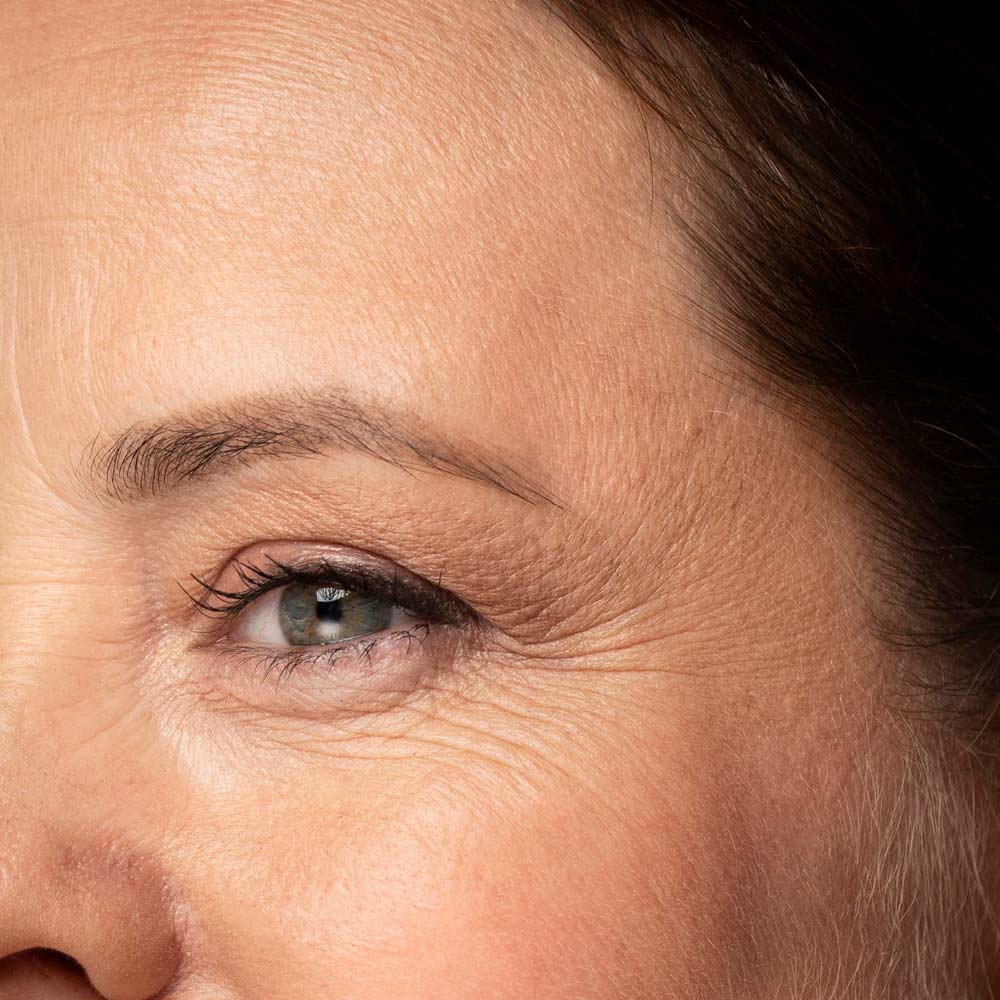
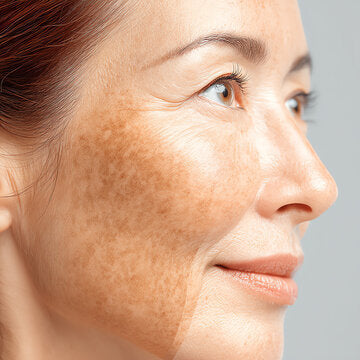
Low estrogen skin typically presents as increased dryness, loss of firmness, more visible fine lines (especially around the mouth and eyes), increased sensitivity to products that previously caused no reaction, and a dull or sallow tone. These changes often appear together rather than in isolation, which distinguishes hormonal skin shifts from ordinary seasonal dryness.
At what age does estrogen start affecting your skin?
Estrogen levels begin declining in your late 30s during perimenopause, and skin changes can start appearing from age 35 onward. The most dramatic shifts happen in the five years surrounding menopause, when estrogen drops by roughly 50%. Surgical menopause, certain medications, or conditions like premature ovarian insufficiency can trigger these skin changes much earlier.
Can skincare products actually help low estrogen skin?
Yes. While topical products can't replace systemic estrogen, they can directly address the downstream effects of estrogen loss. Ingredients like vegan PDRN support DNA repair in skin cells, phytoestrogens partially mimic estrogen's collagen-stimulating effects, and ceramide-rich formulations restore the lipid barrier that thins without estrogen. The key is choosing products specifically formulated for hormone-depleted skin rather than generic lines. The SUM OF ALL journal covers the science behind these ingredients in more detail.
Is low estrogen skin the same as dry skin?
No. Low estrogen skin is not simply dry skin. Dehydrated or dry skin lacks water or oil at the surface level and responds quickly to moisturizers. Low estrogen skin involves structural changes — reduced collagen production, thinner dermis, decreased sebum, and impaired barrier function. You can hydrate the surface, but the underlying collagen loss and structural thinning require targeted ingredients like peptides, PDRN, and phytoestrogens.
How long does it take to see improvement in low estrogen skin?
With consistent use of hormone-conscious skincare, most women notice improved hydration and reduced sensitivity within 2 to 4 weeks. Visible improvements in firmness and fine lines typically take 8 to 12 weeks, as collagen remodelling is a slower process. Full results from a targeted regimen — like pairing the Collagen Boosting Serum Tx with the Replenishing Night Cream Tx — usually become apparent at the 3-month mark.
Read more

Collagen and menopause is a topic that's personal for millions of women — and one that most skincare brands completely ignore. Here's the reality: your skin loses up to 30% of its collagen in the...
The skincare world has a way of discovering breakthrough ingredients and suddenly talking about nothing else. Right now, that ingredient is PDRN – often sensationalized online as “salmon sperm.” Wh...