





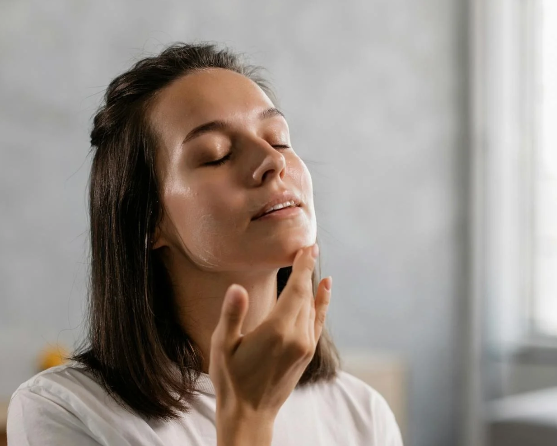
Sagging and Loss of Firmness
The jawline softens, the neck loses definition, the cheeks flatten. When estrogen falls, the dermis loses the collagen scaffolding that held everything taut. Here's how to support firmness from the inside out.
Why firmness fades at menopause
Skin firmness depends on a dense, well-organised network of collagen and elastin in the dermis — and that network is maintained by estrogen. When estrogen declines, fibroblasts slow their output: collagen production falls by around 30% in the first five years after menopause (Brincat et al., 1987), then continues to decline by roughly 2% a year for the next 15 to 20 years, while elastin loses its ability to recoil.
The result is a visible loss of structure. The jawline, which relies on taut skin to stay defined, is usually the first place women notice it — followed by the neck and the apples of the cheeks. This is structural, not superficial, which is why surface treatments alone rarely satisfy. The most effective response works at the level of the dermis: supporting the fibroblast pathway and replenishing the lipids and moisture that keep skin plump and resilient.
Where you'll notice it first
Loss of firmness follows a predictable map in menopausal skin.
The Jawline
The clean line between face and neck softens as the skin loses the collagen tension that defined it.
The Neck
Horizontal banding and slackness appear early — the neck has thinner skin and fewer oil glands than the face.
The Cheeks
Mid-face volume settles downward as the underlying dermal support thins, flattening the face's natural lift.
Around the Mouth
Nasolabial folds deepen and the corners of the mouth lose support as firmness drops.
The Décolletage
The chest creases and loosens — heavily sun-exposed and quick to show lost elasticity.
Under the Eyes
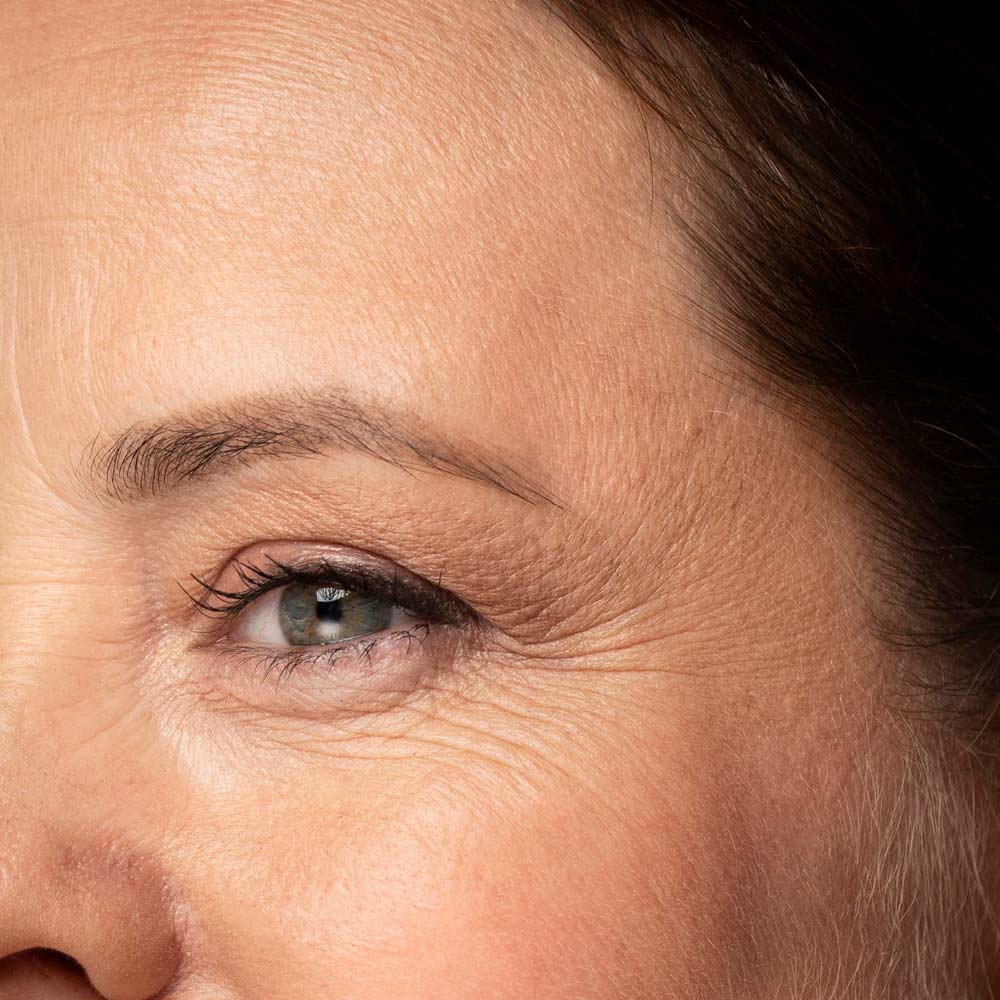
The orbital area slackens and hollows as the thin skin loses its structural cushion.
Ingredients that support firmness
Firming menopausal skin means working at the level of the dermis, not just the surface.
Vegan Bioidentical Collagen Peptides
Biologically identical to human collagen, supporting the fibroblast pathway to help maintain dermal density and firmness.
Learn more →AP2 Longevity Platform
Our patent-pending blend of adaptogens, phytoestrogens and peptides, formulated to support skin through hormonal change.
Learn more →Hibiscus Seed Bioactive
Often called "nature's botox" — supports a smoother, more lifted-looking surface.
Learn more →Encapsulated Retinol
Gentle renewal that supports collagen activity and surface smoothness without irritating thin skin.
Learn more →The firmness edit
Three products that work together to support structure and definition.
Collagen Boosting Serum Tx
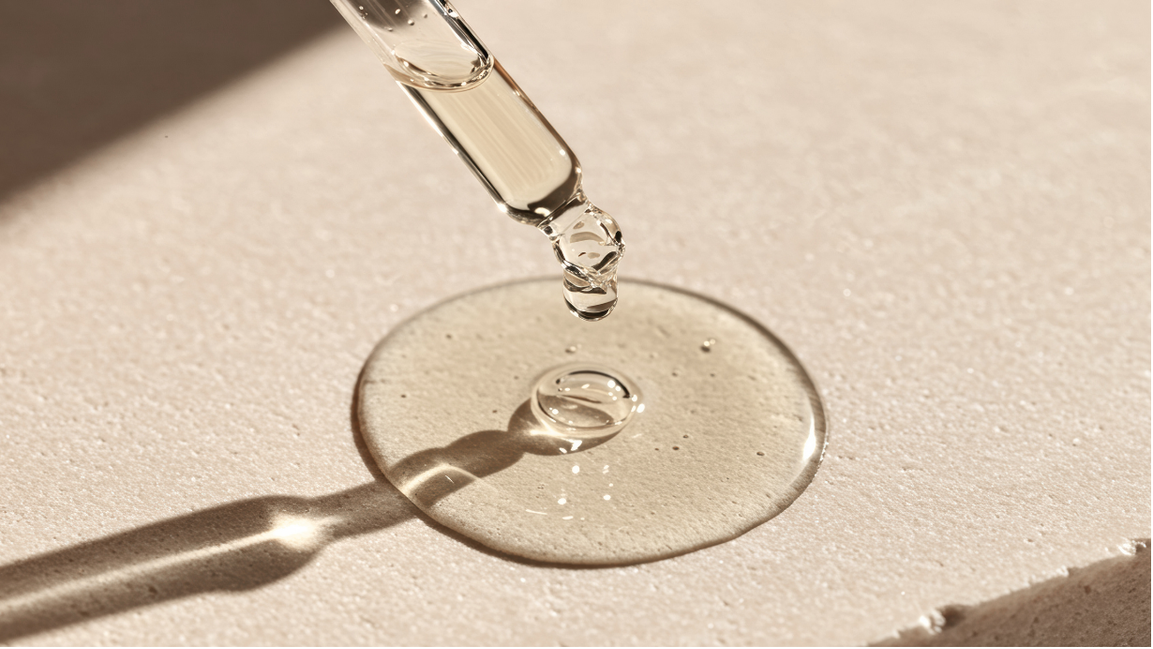
Vegan bioidentical collagen peptides and hibiscus seed bioactive — formulated to support dermal density and firmness.
Shop Serum →Replenishing Night Cream
Plant lipids and encapsulated retinol nourish and replenish the skin overnight, supporting a firmer, plumper-looking finish.
Shop Cream →Overnight Resurfacing Serum Tx
An overnight resurfacing treatment that gently smooths and renews the skin's surface for a refreshed, more even-looking finish.
Shop Serum →Keep reading
More on firmness and structure in menopausal skin.
Frequently asked questions
Can skincare help sagging skin at menopause?
Topical skincare cannot replace surgical lifting, but supporting the fibroblast pathway with collagen peptides and replenishing lost lipids and moisture measurably improves the skin's density, plumpness and firmness over time. It is the most effective non-invasive first step.
Why does my jawline lose definition in menopause?
The jawline relies on taut, collagen-rich skin to stay defined. As estrogen falls, collagen and elastin density drop and the skin can no longer hold the line as crisply, so it softens.
How long until I see firmer-looking skin?
Hydration-related plumping appears within about two weeks. Firmness and density changes from peptide use typically become visible between weeks 4 and 8 of consistent use.
Should I treat my neck too?
Yes. The neck loses firmness faster than the face and is often neglected. Extend your serum and night cream all the way down the neck and décolletage.
Support firmness from the dermis up
Start with the Renewal Regimen — the five core Tx products that target structure, not just surface.
Shop the Routine