





Best Skincare for Menopause
An evidence-led guide to choosing skincare for perimenopause, menopause and beyond — covering the 7 biological shifts, clinical ingredient strategy, and what to use at every stage.
Why menopausal skin needs different skincare
Menopause is the single biggest event in a woman's skin life. Over roughly a decade, the decline in estrogen rewrites the biology of the dermis: collagen production falls by around 30% in the first five years after the final menstrual period (Brincat et al., 1987), hyaluronic acid synthesis drops, sebum output thins, and the skin barrier becomes measurably less competent at retaining water. The clinical name for this pattern is estrogen deficient skin.
Conventional "anti-aging" skincare was designed for chronologically older skin — not for skin responding to a specific endocrine shift. The formulas that worked in your 30s will often feel thin, irritating or outright unhelpful once estrogen drops. Choosing the right products in perimenopause and menopause is less about treating wrinkles and more about supporting the biology underneath them.
The best skincare for menopause combines a barrier-strengthening moisturiser at night, a peptide or vegan bioidentical collagen-supporting serum, an encapsulated retinol for renewal, and a brightening antioxidant in the morning. Look for hormone-conscious formulations that avoid fragrance, harsh alcohols and high-strength acids.
The 7 biological shifts of menopausal skin
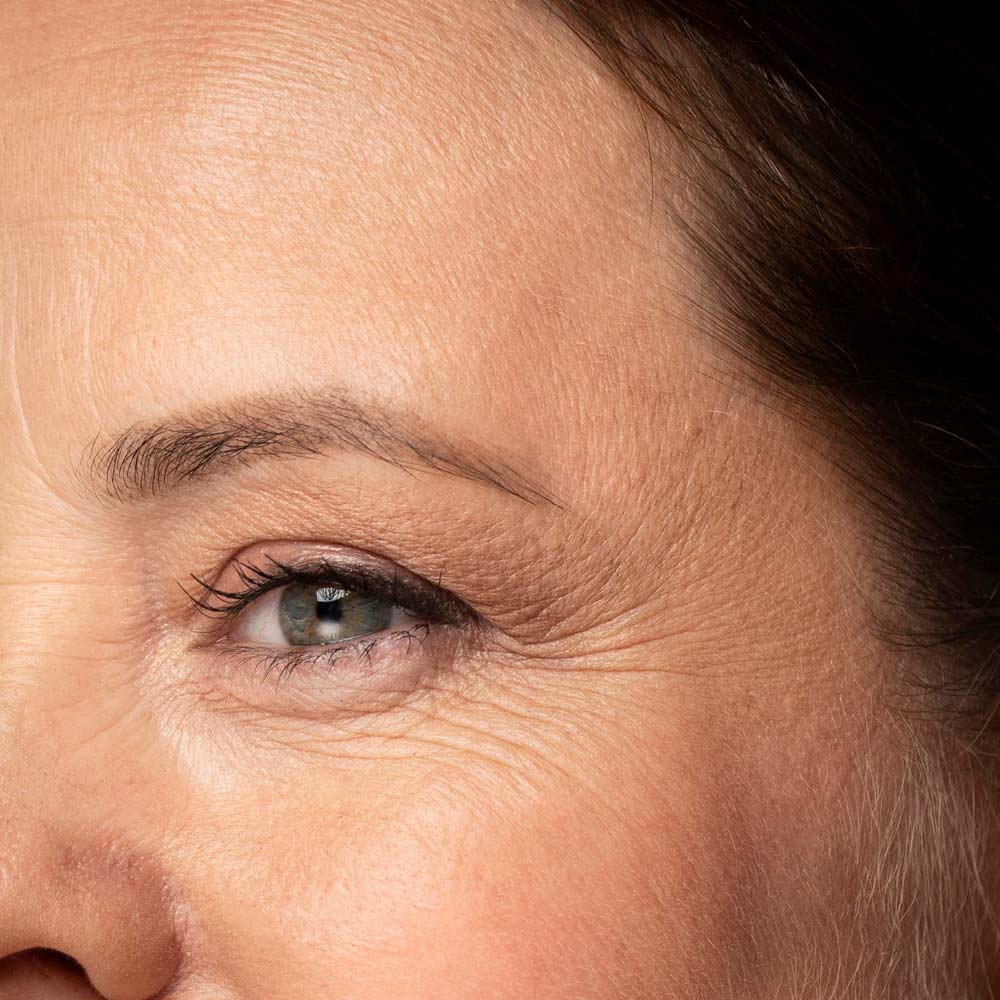
Skincare research now recognises seven distinct, visible shifts that accompany the menopause transition. Treating these as one lumped problem — "aging" — is why so many products fail. We cover each of them in detail on The 7 Visible Shifts of Menopause.
| Shift | What changes | What to look for |
|---|---|---|
| Thinning | Collagen and elastin density fall | Peptides, vegan bioidentical collagen support |
| Dryness | Hyaluronic acid and lipid synthesis drop | Ceramides, plant lipids, polyglutamic acid |
| Barrier loss | Transepidermal water loss climbs | Tremella mushroom, squalane, niacinamide |
| Dullness | Cell turnover slows | Encapsulated retinol, gentle PHAs |
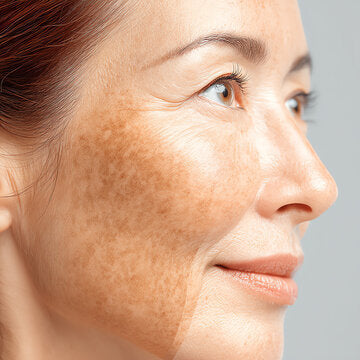
| Uneven tone | Melanin clustering, post-inflammatory pigmentation | Vitamin C, tranexamic acid, azelaic acid |
| Sensitivity | Reduced inflammatory tolerance | Pea extract, chamomile, low-fragrance formulas |
| Loss of bounce | Glycosaminoglycan depletion | Hibiscus seed, red algae, encapsulated vitamin E |
Ingredients that work (and what to skip)
Work for menopausal skin
- Encapsulated retinol — delivers cell turnover without the irritation of standard retinol on thinning skin
- Vegan bioidentical collagen peptides — biologically identical to human collagen, supporting the fibroblast pathway without animal-derived ingredients
- Tremella mushroom — holds up to 500× its weight in water, deeper than hyaluronic acid
- Ceramides and plant lipids — reinforce a compromised lipid bilayer
- Encapsulated vitamin C — brightening without the sensitivity spike of L-ascorbic acid
Skip during the menopause transition
- Denatured alcohol (SD alcohol, alcohol denat) — accelerates barrier loss
- Fragrance/parfum — a leading trigger of menopausal rosacea flares
- High-strength AHA peels (>10%) — thinning stratum corneum is easily over-exfoliated
- Harsh foaming cleansers with sulphates — strip fragile lipids
How to choose a menopause skincare range
A great many ranges are marketed at menopause without being formulated for it. These are the criteria worth checking before you commit to a full routine, and what a genuinely menopause-specific line should be able to answer.
| What to check | Why it matters at this stage | What good looks like |
|---|---|---|
| Formulation intent | Skin responding to an endocrine shift behaves differently from chronologically aged skin | Built around the hormonal change itself, not repackaged anti-aging |
| Collagen source | Marine and bovine collagen molecules are too large to act on the fibroblast pathway topically | Bioidentical peptides that mirror human collagen |
| Retinol format | Standard retinol is frequently intolerable on thinning menopausal skin | Encapsulated, slow-release delivery |
| Barrier actives | Transepidermal water loss climbs measurably as estrogen falls | Ceramides, plant lipids and humectants beyond hyaluronic acid alone |
| Irritant load | Inflammatory tolerance drops, and rosacea-type flares become more common | Low fragrance, no denatured alcohol, no high-strength acids |
| Stage-specific guidance | Perimenopause, menopause and post-menopause need different emphasis | Clear direction per stage, not one routine for a decade |
| Clinical input | Claims in this category are largely unregulated | Practitioner involvement and consumer study data you can actually read |
A clinical routine by stage
Perimenopause (typically early 40s onward)
The barrier is the first thing to shift. Focus on a gentle cleanser, an antioxidant serum and a hydrating moisturiser. Introduce retinol in a low-strength, encapsulated form two or three nights a week.
Menopause (the final menstrual period and the two years either side)
Collagen loss accelerates. Add a peptide serum morning and night. Move to a richer night cream. Pay close attention to the neck and chest — they lose density faster than the face.
Post-menopause (two+ years post-FMP)
Barrier support becomes non-negotiable. Use occlusive-rich night cream, avoid over-exfoliation, and layer a targeted eye cream for the orbital bone changes that follow estrogen depletion.
Our products, mapped to each concern
Collagen Boosting Serum Tx
Vegan bioidentical collagen peptides, Chlorella Vulgaris and vegan PDRN — clinically formulated to support dermal density.
Shop Serum →Overnight Resurfacing Serum Tx
Pineapple enzymes, glycolic acid and flower acids resurface, while chlorella, red algae and tremella mushroom calm and support the barrier.
Shop Serum →Replenishing Night Cream
Encapsulated retinol renews while the Japanese replenishing complex (Tsubaki oil + sacran) and pea peptides rebuild the barrier overnight.
Shop Cream →Energizing Day Cream Tx
Encapsulated vitamins C and E with galanga leaf bioactive and brightening pea bioactive — antioxidant protection for daytime wear.
Shop Cream →Frequently asked questions
When should I switch to menopause skincare?
When you notice the first perimenopausal skin changes — typically sudden dryness, dullness or sensitivity in your early 40s. You do not need to wait for your final menstrual period.
Can I use menopause skincare alongside HRT?
Yes. Systemic or topical HRT supports hormone levels internally; targeted skincare supports the skin's structural and barrier response at the surface. They are complementary, not alternatives.
Is retinol safe during menopause?
Traditional retinol can be harsh on thinning menopausal skin. Encapsulated retinol, which releases slowly, is tolerated far better and is our preferred format for this stage.
How long until I see results?
Barrier and hydration changes appear within two weeks. Collagen-related firmness and tone changes typically become visible between week 4 and week 8 of consistent use.
Is Sum of All cruelty-free and vegan?
Yes. Every formula is vegan and cruelty-free. Our collagen is vegan bioidentical collagen peptides — biologically identical to human collagen, with no marine or bovine collagen anywhere in the line.
The Renewal Regimen
Every product you need to support menopausal skin, in one routine.
Shop the Routine