



Perimenopause Dry Skin: Why It Happens

Perimenopause dry skin is caused by declining estrogen, which weakens your skin's moisture barrier and slows oil production. If your skin feels tight, flaky, or suddenly reactive — especially during the colder months — hormonal shifts are almost certainly driving it. This isn't just "getting older." It's a specific, measurable biological change that responds well to targeted care.
Winter makes everything worse. Cold air holds less moisture, indoor heating strips what's left, and your already-compromised barrier can't keep up. The result is skin that looks dull, feels papery, and reacts to products that worked fine a year ago.
Here's what's actually happening beneath the surface, and what you can do about it.
In This Article
- Why Perimenopause Causes Extreme Skin Dryness
- How Estrogen Loss Damages Your Skin Barrier
- Best Moisturizers for Perimenopause Dry Skin
- Hydrating Ingredients That Actually Work at Midlife
- Day vs Night Routines for Dry Perimenopause Skin
- Diet and Lifestyle Changes That Improve Skin Hydration
- Frequently Asked Questions About Perimenopause Dry Skin
Why Perimenopause Causes Extreme Skin Dryness
Perimenopause dry skin happens because your body produces less estrogen — the hormone that directly controls how much moisture your skin can hold. Estrogen stimulates sebaceous glands, drives hyaluronic acid synthesis, and maintains collagen structure. When levels drop, all three systems slow down at once.
According to a 2006 study published in the American Journal of Clinical Dermatology, skin collagen declines by roughly 30% in the first five years after menopause begins. That loss starts during perimenopause, not after it.
Perimenopause dry skin is not simply a cosmetic concern — it's a sign that your skin barrier is losing structural integrity. It is a direct result of hormonal change, not poor skincare habits or insufficient water intake.
The timeline matters too. Perimenopause can last anywhere from 4 to 10 years before your final period. During that stretch, estrogen doesn't decline smoothly. It spikes, crashes, and fluctuates unpredictably. Your skin responds to every swing. One week it's oily; the next, it's peeling around your nose and jawline.
Cold weather amplifies the problem significantly. Outdoor humidity drops below 30% in most climates during winter, and indoor heating pushes it even lower. A skin barrier that's already weakened by hormonal changes can't compensate for that kind of environmental stress. That's why so many women notice their worst dryness between November and February.
How Estrogen Loss Damages Your Skin Barrier
Your skin barrier is a layer of lipids, ceramides, and proteins that sits on top of the epidermis. Think of it as mortar between bricks. Estrogen keeps that mortar strong. When estrogen drops during perimenopause, the mortar thins — and water escapes through the gaps.
According to research published in Experimental Dermatology, estrogen receptors exist throughout the skin, particularly in keratinocytes and fibroblasts. These receptors regulate ceramide production, which forms the backbone of your skin's moisture barrier. Fewer estrogen signals mean fewer ceramides, which means more transepidermal water loss (TEWL).
Here's what happens in sequence:
| Barrier Component | Role in Skin Hydration | Effect of Estrogen Decline |
|---|---|---|
| Ceramides | Seal moisture between skin cells | Production drops 30-40% |
| Hyaluronic acid | Binds 1,000x its weight in water | Synthesis slows significantly |
| Sebum (natural oils) | Creates protective surface film | Sebaceous glands shrink |
| Collagen | Provides structural hydration support | Declines ~2% per year |
| Glycosaminoglycans | Attract and hold water in dermis | Reduced without estrogen stimulus |
The compounding effect is what makes perimenopause dry skin so stubborn. It's not just one system failing — it's five, simultaneously. Standard moisturizers that simply sit on the surface can't address damage that starts at the cellular level. That's why hormone-conscious skincare matters: it targets the specific mechanisms that shift during midlife.
Barrier damage is not permanent, but it does require targeted repair. Generic "hydrating" products often lack the lipid complexity your skin needs at this stage.
Best Moisturizers for Perimenopause Dry Skin
The best moisturizer for perimenopause dry skin contains three things: occlusives to seal moisture in, humectants to draw water up from the dermis, and barrier-repair ingredients that address the hormonal root cause. You need all three working together — not just one.
A basic humectant (like hyaluronic acid alone) will actually make things worse in low-humidity environments. It pulls water out of your deeper skin layers when there isn't enough moisture in the air. Pair it with an occlusive — squalane, shea butter, or plant-derived ceramides — and the humectant does its job properly.
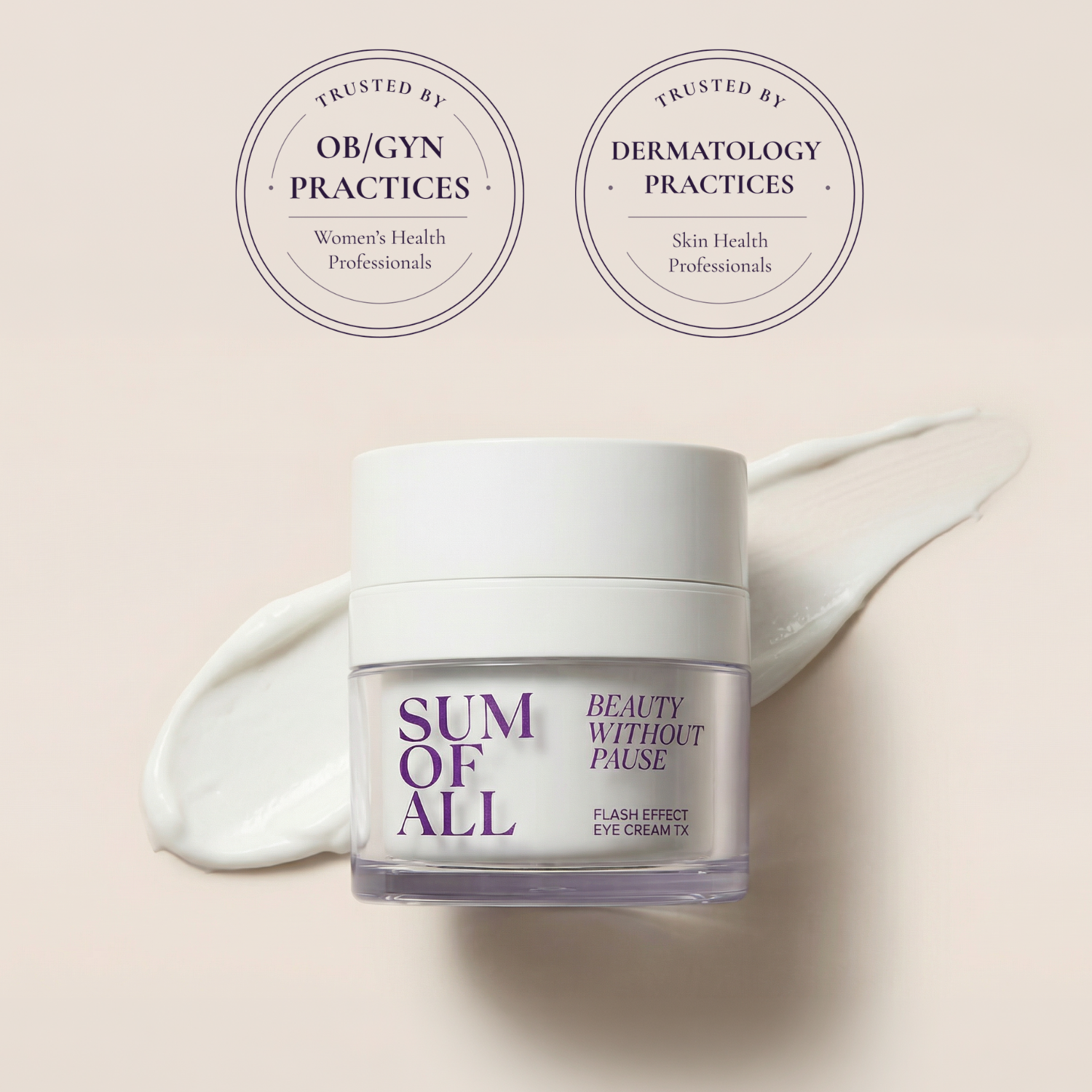
For perimenopause specifically, look for formulas that include peptides and phytoestrogens. These ingredients can partially compensate for reduced estrogen signalling in skin cells. The Replenishing Night Cream Tx from SUM OF ALL was designed around this principle — it combines plant-based peptides with Tremella mushroom (a natural humectant that holds more water than hyaluronic acid, gram for gram) and vegan PDRN for cellular repair.
During the day, you need moisture plus protection. UV exposure and pollution accelerate barrier damage on top of hormonal decline. A rich day cream with antioxidants and SPF layered over a hydrating serum gives you both. The Energizing Day Cream handles the daytime side of this equation, though you'll still want a dedicated SPF on top in direct sunlight.
A good perimenopause moisturizer is not just "rich" or "thick" — it's biochemically matched to what your skin has lost. Texture alone doesn't equal efficacy.
Hydrating Ingredients That Actually Work at Midlife
Not every hydrating ingredient works the same way on perimenopause dry skin. Your barrier is compromised, so you need ingredients that repair structure — not just add temporary moisture on top. Here's what the research supports.
Vegan PDRN (polydeoxyribonucleotide) is a standout. According to a 2021 study in the Journal of Cosmetic Dermatology, PDRN promotes fibroblast proliferation and collagen synthesis — exactly what declining estrogen suppresses. It's a cornerstone of SUM OF ALL's Collagen Boosting Serum Tx and Overnight Resurfacing Serum Tx.
Phytoestrogens — plant compounds that weakly bind to estrogen receptors in skin — can partially offset what your body no longer produces at full capacity. Soy isoflavones and red clover are the most studied, with evidence showing improved skin thickness and elasticity in postmenopausal women.
| Ingredient | How It Helps | Best For |
|---|---|---|
| Vegan PDRN | Stimulates collagen + cell repair | Thinning, loss of firmness |
| Tremella mushroom | Holds more water than HA per gram | Deep dehydration |
| Plant-based peptides | Signal collagen production | Fine lines, crepey texture |
| Ceramides (plant-derived) | Rebuild lipid barrier structure | Flaking, sensitivity |
| Phytoestrogens | Weakly mimic estrogen in skin cells | Overall hormonal dryness |
| Squalane | Mimics natural sebum, seals barrier | Oil production decline |
| Niacinamide (B3) | Boosts ceramide synthesis | Redness, uneven tone |
Skip anything with drying alcohols (denatured alcohol, SD alcohol) high on the ingredient list. Fragrance can also irritate a weakened barrier. Your skin at 45 doesn't tolerate what it handled at 30 — and that's not a flaw, it's biology.
Day vs Night Routines for Dry Perimenopause Skin
Your skin does different things during the day and at night, and your routine for perimenopause dry skin should match that rhythm. During the day, you're defending against UV, pollution, and moisture loss. At night, your skin shifts into repair mode — cell turnover peaks, and active ingredients penetrate more effectively.
Morning routine (protect and hydrate):
- Gentle, non-foaming cleanser (cream or milk formula — avoid anything that strips)
- Hydrating serum with humectants (Tremella, hyaluronic acid, glycerin)
- A peptide-rich day cream like the Energizing Day Cream for moisture and antioxidant protection
- SPF 30+ sunscreen as the final step (UV accelerates collagen loss)
Evening routine (repair and replenish):
- Oil-based or balm cleanser to dissolve SPF and makeup without stripping lipids
- A treatment serum — the Collagen Boosting Serum Tx uses vegan PDRN and AP2 Complex to support collagen while you sleep
- Rich night cream with ceramides, peptides, and occlusives to seal everything in — the Replenishing Night Cream Tx was built for this step
If you're new to hormone-conscious skincare and don't know where to start, the Renewal Regimen Starter Set bundles the essentials so you're not guessing about which products layer correctly.
One critical winter adjustment: add a humidifier to your bedroom. Indoor heating drops humidity to 20-25%, and even the best night cream can't fully compensate for air that dry. A humidifier set to 40-50% gives your skin a fighting chance overnight.
The right routine is not about more products — it's about using fewer, better-targeted products at the right time of day.
Diet and Lifestyle Changes That Improve Skin Hydration
Topical products handle the outside. But perimenopause dry skin also responds to what you put inside your body. Certain nutrients directly support the skin barrier, and deficiencies in them make dryness measurably worse.
Omega-3 fatty acids are the single most impactful dietary change for skin hydration. A 2013 study in the Journal of Lipid Research found that omega-3 supplementation improved skin barrier function and reduced transepidermal water loss. Wild salmon, sardines, walnuts, and ground flaxseed are the best food sources. If you don't eat fish regularly, a quality fish oil or algae-based supplement covers the gap.
Phytoestrogen-rich foods offer mild hormonal support from the inside. Soy (tofu, edamame, tempeh), flaxseed, and chickpeas contain isoflavones and lignans that bind weakly to estrogen receptors — including those in skin.
Hydration is straightforward but often overlooked: aim for at least 2 liters of water daily. Herbal teas count. Coffee and alcohol don't — both are diuretics that pull water away from skin cells.
Sleep quality matters more than most people realize. Growth hormone, which drives skin repair, peaks during deep sleep. Interrupted or insufficient sleep (common during perimenopause) directly reduces your skin's ability to recover overnight. Even small improvements — consistent bedtime, cooler room temperature, no screens 30 minutes before bed — compound over weeks.
Stress management isn't a luxury. Cortisol, the stress hormone, actively breaks down collagen and thins the skin barrier. Chronic stress during perimenopause creates a double hit: estrogen going down, cortisol going up. Regular movement (even 30-minute walks), breathwork, or any practice that lowers cortisol gives your skin a better environment to function in.
Frequently Asked Questions About Perimenopause Dry Skin
Why does perimenopause make skin so dry?
Perimenopause dry skin is caused by declining estrogen levels, which reduce your skin's ability to produce ceramides, hyaluronic acid, and natural oils. Estrogen directly regulates sebaceous gland activity and collagen production, so when levels drop — sometimes by 30% or more before your last period — your skin barrier weakens and moisture escapes faster than it can be replaced.
At what age does perimenopause dry skin usually start?
Most women notice perimenopause dry skin between ages 40 and 45, though it can start as early as the mid-30s. The dryness tends to worsen progressively as estrogen levels continue to fluctuate and decline over the 4 to 10 years leading up to menopause. Winter months typically bring the most noticeable flares because low humidity compounds the hormonal barrier damage.
Can diet help with perimenopause dry skin?
Yes. Omega-3 fatty acids from salmon, walnuts, and flaxseed support the skin's lipid barrier from within. Phytoestrogen-rich foods like soy, flaxseed, and chickpeas can mildly mimic estrogen's skin-protective effects. Drinking adequate water (at least 2 liters daily) and eating antioxidant-rich fruits and vegetables also supports skin hydration during perimenopause.
Is perimenopause dry skin the same as eczema?
Perimenopause dry skin is not eczema, though the two can look similar. Hormonal dryness tends to be widespread — face, neck, arms, legs — while eczema usually appears in localized patches with inflammation and itching. If your skin is cracking, flaking in specific areas, or intensely itchy, see a dermatologist to rule out eczema or contact dermatitis.
What ingredients should I avoid if I have perimenopause dry skin?
Avoid harsh sulfate cleansers (sodium lauryl sulfate), high-concentration retinoids without proper buffering, alcohol-based toners, and strong chemical exfoliants like glycolic acid above 10%. These can strip an already compromised skin barrier. Look instead for gentle, pH-balanced formulas with ceramides, peptides, and humectants designed for hormone-conscious skincare.
Read more

For too long, the beauty industry has told women to fight against something inevitable. “Anti-aging.” “Wrinkle-defying.” “Turn back the clock.” These phrases have dominated skincare shelves and sha...

Menopause isn’t something that happens all at once. For most women, menopause symptoms begin gradually during perimenopause, often years before the final menstrual period. Sleep feels different. Sk...