
Menopause Skin Care: The Ultimate Guide
Menopause Skin Care: The Ultimate Guide
Menopause skin care is a hormone-conscious approach to supporting skin through perimenopause, menopause, and post-menopause using ingredients that compensate for declining estrogen. It rebuilds barrier function, replaces lost lipids, supports collagen, and calms reactivity without disrupting the hormonal landscape underneath.
Table of Contents
- How Menopause Changes Your Skin at Every Stage
- The Science Behind Hormone-Conscious Skincare
- Essential Ingredients for Menopausal Skin
- Building a Menopause Skincare Routine Step by Step
- Best Day and Night Products for Menopausal Skin
- Common Menopause Skincare Mistakes to Avoid
- Frequently Asked Questions
If your skin suddenly feels like it belongs to someone else — drier, thinner, more reactive, slower to bounce back — you're not imagining it. Falling estrogen rewires almost every layer of the skin, and the products that worked in your thirties often stop working in your forties and fifties. This pillar guide walks you through every stage of menopausal skin change, the science of hormone-conscious formulation, the ingredients that actually help, and a complete day-and-night routine built around the Sum of All product line.
How Menopause Changes Your Skin at Every Stage
Menopause isn't a single event. It's a transition that unfolds over a decade or more, and your skin responds differently at each phase. Understanding the stage you're in is the first step in building a routine that meets your skin where it is.
Perimenopause (late 30s to mid-40s)
Estrogen begins to fluctuate erratically. You may notice the first signs of dehydration, dullness, hormonal breakouts along the jawline, and a loss of the "glow" you used to take for granted. Sebum production becomes unpredictable — oily one week, parched the next. According to the North American Menopause Society (NAMS), perimenopausal symptoms can begin up to a decade before the final menstrual period.
Menopause and post-menopause
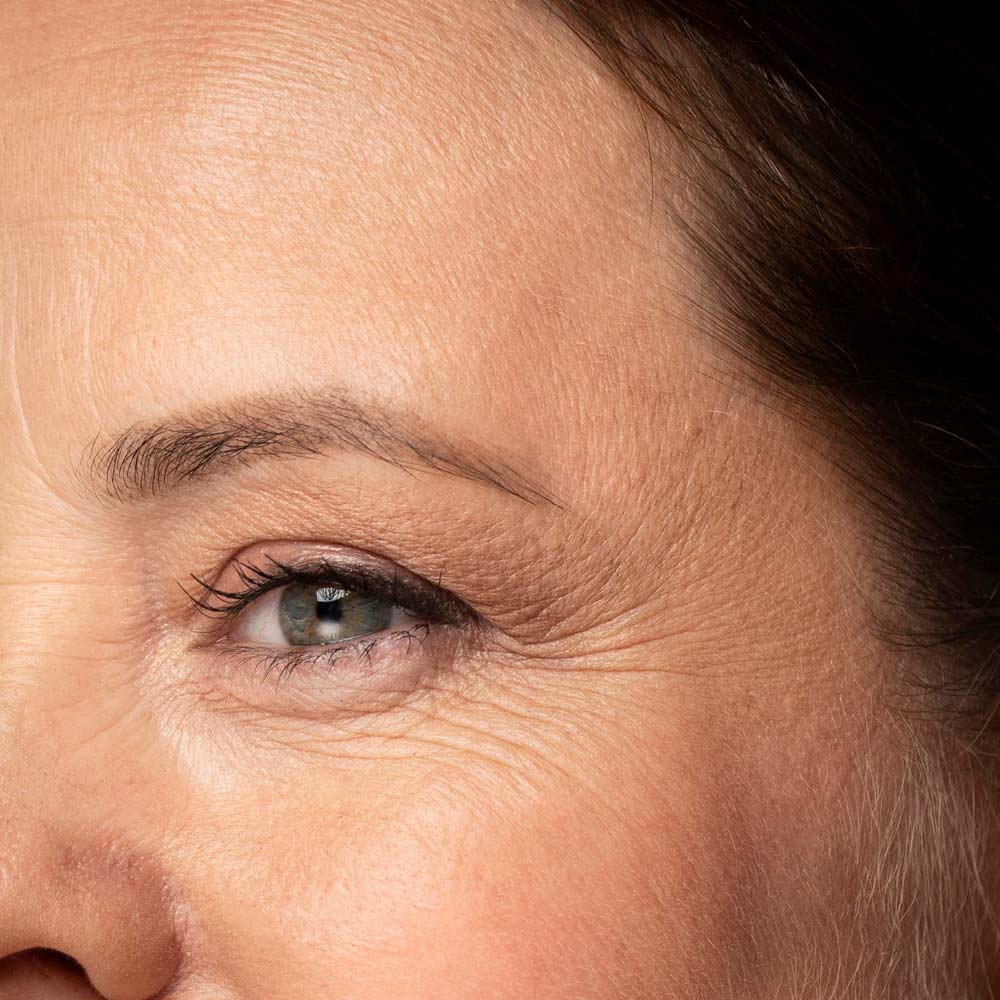
Estrogen drops sharply and stays low. According to research published in the Journal of Investigative Dermatology, women lose roughly 30% of their skin's collagen in the first five years after menopause, followed by a steadier decline of about 2% per year. Skin becomes visibly thinner, fine lines deepen, and the cheeks and jawline lose their structural plumpness.
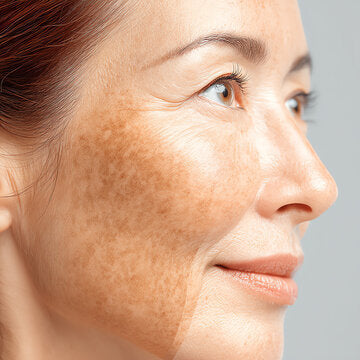
In post-menopause, hyaluronic acid levels in the dermis fall, ceramides deplete, and the skin's natural exfoliation cycle slows from roughly 28 days to 40 or more. According to the American Academy of Dermatology (AAD), pigmentation can become uneven as melanocyte regulation shifts.
Menopausal skin is not damaged skin. It is simply skin operating in a new hormonal environment, and it responds beautifully to the right inputs. For more on this, see our perimenopause skin changes guide and post-menopause skincare guide.
The Science Behind Hormone-Conscious Skincare
Hormone-conscious skincare is a category built around a simple idea: skin is a hormonally responsive organ, and formulations should support that biology rather than ignore it. It isn't hormone replacement, and it isn't a topical estrogen.
Estrogen receptors live throughout the skin — in keratinocytes, fibroblasts, sebaceous glands, and hair follicles. When estrogen binds to these receptors, it stimulates collagen and elastin synthesis, supports hyaluronic acid production, regulates sebum, and maintains barrier integrity. According to the British Menopause Society, every one of those functions slows when estrogen falls.
Hormone-conscious skin care is not about adding hormones to your skin. It is about replacing the downstream effects estrogen used to deliver: lipid replenishment, collagen support, antioxidant defense, and barrier restoration. Done well, this approach can dramatically improve the look and feel of menopausal skin without interfering with HRT or any medical treatment.
This is the philosophy behind every Sum of All formula. Our AP2 Complex was developed specifically as a hormone-conscious actives serum — a peptide and antioxidant blend designed to support skin during the exact period when estrogen withdraws its biological favors. For deeper reading, see our AP2 Complex explainer and phytoestrogens in skincare articles.
Essential Ingredients for Menopausal Skin
Not every "anti-aging" ingredient suits menopausal skin. Some, like high-strength retinoids or aggressive acids, can backfire on a thinner, more reactive barrier. The ingredients below have the strongest evidence and the gentlest profile for skin in transition.
| Ingredient | What It Does | Why It Matters in Menopause |
|---|---|---|
| Peptides (signal & carrier) | Tell fibroblasts to produce more collagen and elastin | Compensates for the collagen drop estrogen no longer drives |
| Niacinamide (Vitamin B3) | Strengthens barrier, evens tone, reduces redness | Calms reactive, flushed menopausal skin |
| Ceramides | Replace the lipids that hold the barrier together | Stops the dryness and stinging that come with barrier loss |
| Hyaluronic acid (multi-weight) | Holds water in the dermis and epidermis | Replaces the HA your skin no longer makes in the same volume |
| Bakuchiol | Plant-derived retinol alternative | Cell turnover support without retinoid irritation |
| Squalane | Lightweight, skin-identical emollient | Replaces the sebum menopausal skin no longer produces |
| Vitamin C (stable forms) | Antioxidant, brightening, collagen co-factor | Defends thinning skin against oxidative aging |
| Phytoestrogens (topical) | Plant compounds that gently mimic estrogen activity in skin | Hormone-conscious support without endocrine disruption |
According to the Cleveland Clinic, the most effective approach for menopausal skin combines a humectant (hyaluronic acid), an emollient (squalane), and an occlusive layer to lock everything in. A few things this list deliberately leaves out: alcohol-heavy toners, fragrance-forward formulas, sulfate cleansers, and high-percentage glycolic acid. Menopausal skin doesn't need stripping. It needs replenishing.
For deeper dives on specific actives, see our guides on the best ingredients for menopause skin and collagen and menopause.
Building a Menopause Skincare Routine Step by Step
A menopause skincare routine should be simple enough to do every day and structured enough to deliver real results. The routine below is built in layers, lightest to heaviest, morning and night. You don't need ten steps. You need the right five or six.
- Cleanse gently. Use a cream, milk, or oil cleanser that respects the barrier. Foaming cleansers strip the lipids menopausal skin can't afford to lose.
- Treat with a hormone-conscious serum. This is where AP2 Complex sits — peptides and actives delivered before moisturizer locks them in.
- Hydrate. A hyaluronic-acid-based layer or a collagen-supporting serum draws water into the skin.
- Moisturize. Choose a barrier-replenishing cream rich in ceramides, squalane, and emollients.
- Protect (mornings). According to the Mayo Clinic, broad-spectrum SPF 30 or higher is the most evidence-backed anti-aging intervention available.
- Resurface (selected nights). A gentle overnight resurfacing serum two or three nights a week supports the slowing cell turnover cycle.
The key principle: layer thinnest to thickest, and never skip the moisturizer. Menopausal skin loses water faster than it can replace it, and an occlusive top layer is what holds everything in.
Best Day and Night Products for Menopausal Skin
The best menopause skincare routine pairs morning protection with night-time repair. Your skin does most of its regeneration overnight, when blood flow to the dermis increases and barrier repair peaks. Splitting your products this way isn't optional — it's how you double your results without doubling your effort.
| Step | Morning | Night |
|---|---|---|
| 1. Cleanse | Gentle cream cleanser or rinse with water | Cream or oil cleanser to remove the day |
| 2. Treat | AP2 Complex (peptide actives) | AP2 Complex (peptide actives) |
| 3. Hydrate | Collagen Boosting Serum | Overnight Resurfacing Serum (2–3x/week) |
| 4. Moisturize | Lightweight day moisturizer | Replenishing Night Cream |
| 5. Protect | Broad-spectrum SPF 30+ | — |
The four Sum of All products work as a system. AP2 Complex delivers peptide actives and antioxidant defense morning and night. Collagen Boosting Serum supports the structural proteins menopausal skin is losing fastest. Replenishing Night Cream rebuilds the lipid barrier with ceramides and squalane while you sleep. Overnight Resurfacing Serum keeps cell turnover ticking over without the irritation of harsh acids — use it two or three nights a week, never every night.
If you're new to the line, we recommend starting with AP2 Complex and the Replenishing Night Cream, then layering in the Collagen Boosting Serum once your barrier feels strong.
Common Menopause Skincare Mistakes to Avoid
Most of the menopause skincare mistakes we see aren't about doing too little — they're about doing too much, or doing the wrong thing aggressively. Here are the patterns to watch for:
- Stripping the barrier with foaming cleansers and toners. Menopausal skin needs lipids, not squeak.
- Cranking up retinol strength. Higher percentages often cause more inflammation than collagen gain on thinning skin. Switch to bakuchiol or a gentle resurfacing serum instead.
- Skipping moisturizer because skin feels "oily." Menopausal oiliness is usually dehydration in disguise.
- Layering too many actives. Vitamin C, retinol, AHAs, BHAs, and peptides all in one routine is a recipe for inflammation.
- Forgetting SPF on cloudy days. UV is the biggest accelerator of collagen loss in post-menopausal skin.
- Chasing results too fast. Skin needs at least eight to twelve weeks to show real change.
A second pattern worth naming: jumping from product to product every few weeks. Menopausal skin is not the place to chase TikTok trends. It is the place to commit to a small number of well-formulated, hormone-conscious products and let them do their job.
For a deeper dive on barrier repair, see our cluster article on restoring the skin barrier in menopause, and for hot flushes and facial flushing, our menopause flushing and redness guide walks through calming protocols in detail.
Frequently Asked Questions
At what age does menopause start to affect the skin? Most women notice the first changes in their late 30s or early 40s, during perimenopause. Estrogen begins to fluctuate years before periods stop, and the skin is often the first place those fluctuations show up.
Is menopause skin care different from regular anti-aging skincare? Yes. Standard anti-aging skincare often relies on aggressive actives that can over-strip a thinning, more reactive barrier. Menopause skin care is hormone-conscious — it focuses on replenishing what estrogen used to deliver.
Can topical skincare really replace estrogen? No, and it shouldn't try to. Hormone-conscious skin care compensates for its downstream effects on the skin — collagen support, lipid replacement, hydration, and antioxidant defense — without affecting your endocrine system.
How long until I see results from a new menopause skincare routine? Plan on eight to twelve weeks for visible change. Hydration improves within a couple of weeks, but collagen-related improvements take a full skin cycle and usually longer.
Do I still need SPF after menopause? Absolutely. UV is the single biggest accelerator of collagen loss in post-menopausal skin. Daily broad-spectrum SPF 30 or higher is the most powerful anti-aging step you can take.
Is it safe to use retinol during menopause? Yes, but at lower strengths and with care. Many women find bakuchiol or a gentle overnight resurfacing serum more comfortable than traditional retinol.
Will hormone-conscious skin care interfere with HRT? No. Topical hormone-conscious formulas like AP2 Complex are designed to work alongside HRT, not against it.
What is the single most important product for menopausal skin? A barrier-replenishing night cream rich in ceramides and squalane. Without an intact barrier, no other product can deliver its full benefit.
Why is my skin suddenly so dry in menopause? Falling estrogen reduces sebum production, ceramide synthesis, and hyaluronic acid in the dermis. The fix is layered hydration plus a lipid-rich moisturizer.
Can I start menopause skin care in perimenopause? Yes, and you should. Perimenopause is the ideal moment to introduce a hormone-conscious routine like the Sum of All system.
Written by Stacey. Reviewed by the Sum of All Editorial Team.