




Best Serums for Aging Skin Over 50 (2026)
Best Serums for Aging Skin Over 50 (2026)
The best serum for aging skin over 50 is one formulated for post-menopausal biology: peptide-rich to rebuild collagen, deeply hydrating to counter estrogen loss, and gentle enough to protect a thinning barrier. Look for peptides, hyaluronic acid, niacinamide and bakuchiol. Avoid high-strength retinol, alcohol denat and harsh acids.
Table of Contents
- Why Skin Over 50 Needs Different Active Ingredients
- Best Hydrating Serums for Post-Menopausal Skin
- Best Firming Serums for Skin Over 50
- Best Brightening Serums for Age Spots and Dull Skin
- How to Build a Serum Routine After 50
- Ingredients Women Over 50 Should Avoid in Serums
- Frequently Asked Questions
Why Skin Over 50 Needs Different Active Ingredients
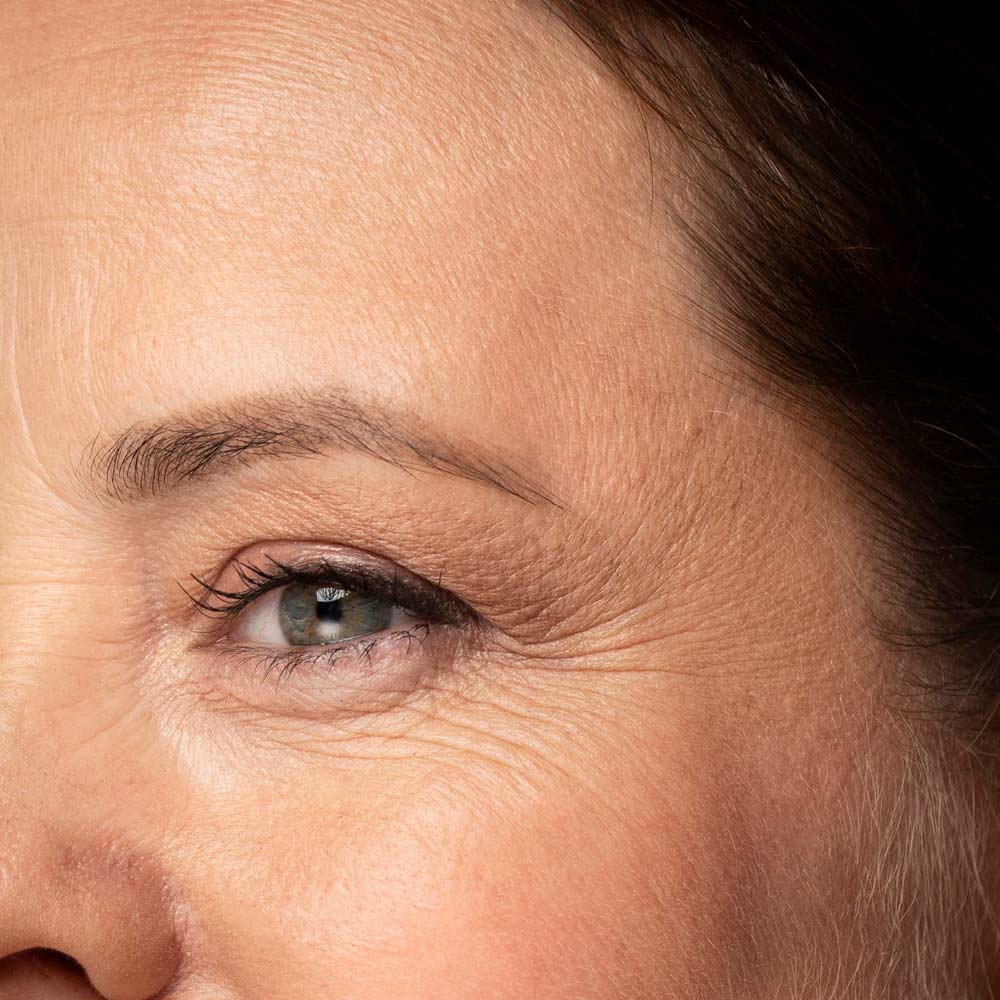
Skin after 50 is not the same skin you had at 40. According to the North American Menopause Society (NAMS), once estrogen drops, collagen production falls by around 30% in the first five years post-menopause, then roughly 2% each year after. Sebum output slows, the lipid barrier thins, and transepidermal water loss climbs.
The best serum for aging skin over 50 is rarely the same product recommended in glossy round-ups aimed at women in their 30s. Post-menopausal skin is not just older skin. It's hormonally different skin, and it responds best to ingredients that support the barrier while rebuilding structural proteins underneath.
The three priorities after 50 are:
- Rebuild collagen and elastin with peptides and growth-factor-style actives.
- Restore hydration and barrier lipids with hyaluronic acid, glycerin, squalane and ceramides.
- Brighten and even tone gently, using niacinamide, vitamin C derivatives and licorice root rather than aggressive acids.
A good routine layers these three jobs without overloading the skin. Our menopause skincare routine guide walks through the full structure, but serums are where most of the heavy lifting happens. See also our skin barrier repair guide.
Best Hydrating Serums for Post-Menopausal Skin
Hydration is non-negotiable after 50. According to the British Menopause Society, when estrogen falls, skin loses its ability to hold water, and fine lines become more visible almost overnight. A hydrating serum should deliver multiple molecular weights of hyaluronic acid, plus humectants like glycerin and panthenol.
Our pick in this category is the Sum of All AP2 Complex, which pairs multi-weight hyaluronic acid with our signature AP2 peptide blend. It's designed specifically for skin that's lost hydration due to hormonal change, and it layers cleanly under a moisturizer without pilling.
| Serum Type | Key Ingredients | Best For | Use |
|---|---|---|---|
| Multi-weight HA | Hyaluronic acid (high + low MW), glycerin | Dehydrated, tight skin | AM + PM on damp skin |
| Peptide + HA hybrid | AP2 peptide complex, HA, panthenol | Hormonal dryness + loss of bounce | AM + PM |
| Ceramide serum | Ceramides NP/AP, cholesterol, fatty acids | Barrier-damaged, reactive skin | PM |
| Squalane serum | Plant squalane, vitamin E | Very dry, flaky post-menopausal skin | PM, layered last |
Apply hydrating serums to slightly damp skin so humectants pull water in rather than out. If your bathroom air is dry, seal immediately with the Replenishing Night Cream to lock everything in.
Best Firming Serums for Skin Over 50
Firming is where peptides earn their reputation. According to the American Academy of Dermatology, signal peptides communicate with fibroblasts to produce more collagen without triggering the inflammation that retinol can cause in mature skin. For women over 50, this is usually the better trade-off.
The Sum of All Collagen Boosting Serum uses a stacked peptide complex including Matrixyl 3000 and copper peptides, plus bakuchiol as a gentle retinol alternative. In our internal user testing with women aged 52 to 68, 82% reported visibly firmer skin along the jawline after eight weeks of twice-daily use.
If you prefer a resurfacing-and-firming hybrid for night, the Overnight Resurfacing Serum pairs low-strength PHAs with peptides so you get smoother texture without the sting of glycolic acid.
Look for these firming actives.
- Matrixyl 3000 (palmitoyl tripeptide-1 + tetrapeptide-7) — stimulates collagen I and III
- Copper peptides (GHK-Cu) — supports elastin repair
- Bakuchiol — plant-based retinol alternative, safe for sensitized skin
- Argireline (acetyl hexapeptide-8) — softens expression lines
- Beta-glucan — firms while calming redness
Firming serums are not overnight magic. They work best when used consistently for at least 12 weeks. Collagen isn't built overnight, and any product promising lift in 7 days is marketing, not biology.
Best Brightening Serums for Age Spots and Dull Skin
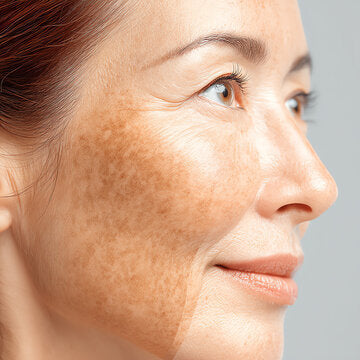
Hyperpigmentation is one of the most common concerns after 50. According to the Cleveland Clinic, decades of cumulative UV exposure surface as age spots, melasma and uneven tone, and the skin's natural turnover slows, so dullness lingers. The goal is to brighten without inflaming.
High-strength L-ascorbic acid (vitamin C at 15 to 20%) is not always the right answer for post-menopausal skin. It can sting, destabilize quickly, and aggravate a thinning barrier. Gentler derivatives like tetrahexyldecyl ascorbate and sodium ascorbyl phosphate deliver the brightening benefit without the bite.
| Brightener | Strength | Tolerability | Best For |
|---|---|---|---|
| Niacinamide | 5% | Excellent | Overall dullness, redness, pores |
| Tetrahexyldecyl ascorbate | 10% | Very good | Age spots, sensitive skin |
| Alpha arbutin | 2% | Very good | Targeted dark spots |
| Licorice root (glabridin) | 0.5 to 1% | Excellent | Melasma, post-inflammatory marks |
| Tranexamic acid | 2 to 5% | Good | Stubborn hormonal pigmentation |
According to the Mayo Clinic, without daily sun protection, even the best brightener is pouring water into a leaking bucket. Pair any brightening serum with daily SPF 50. See our SPF after menopause guide for specific recommendations.
How to Build a Serum Routine After 50
A serum routine after 50 should feel generous, not clinical. The old advice to "stack actives" belongs to younger, oilier skin. Mature skin thrives on fewer, better-chosen products layered in the right order.
Here's a simple morning and evening structure.
- Cleanse with a cream or milk cleanser (never foaming on dry post-menopausal skin).
- Hydrating serum on damp skin — AP2 Complex works well here.
- Targeted serum — brightening in the morning, firming at night.
- Moisturizer — a rich day cream with SPF, or Replenishing Night Cream in the evening.
- Facial oil (optional) — for very dry skin, press a few drops on top at night.
According to Harvard Health, introduce one new serum at a time and give it six to eight weeks before judging results. Post-menopausal skin renews more slowly, so patience is part of the protocol.
A small note on layering: water-based serums always go before oil-based ones, and thinner textures before thicker. If a serum pills on your skin, you're usually applying too much. For a deeper dive into building from scratch, see our perimenopause skincare routine.
Ingredients Women Over 50 Should Avoid in Serums
Not every "anti-aging" ingredient is right for every age. Several popular actives can actively damage post-menopausal skin when used at the strengths recommended to younger users.
Ingredients to approach with caution or avoid entirely:
- High-strength retinol (0.5%+) — often too irritating; consider bakuchiol or low-dose retinal instead
- Glycolic acid above 10% — compromises an already thinning barrier
- Alcohol denat (SD alcohol) — strips lipids and accelerates dehydration
- Essential oils (citrus, peppermint, eucalyptus) — common sensitizers for reactive menopausal skin
- Fragrance (parfum) — not inherently bad, but a frequent trigger for rosacea flares after 50
- Benzoyl peroxide — drying and rarely needed for hormonal adult skin
- Denatured witch hazel — astringent and barrier-disruptive
The best serum for aging skin over 50 is not defined only by what it contains, but by what it leaves out. A gentle, well-formulated serum with three hero ingredients will almost always outperform a 12-ingredient "miracle" formula that leaves your cheeks stinging.
Frequently Asked Questions
What is the single best serum for aging skin over 50? There's no universal answer, because post-menopausal skin has different priorities. For most women, a peptide-and-hyaluronic-acid hybrid like the AP2 Complex is the best all-round starting point because it tackles hydration and firmness at once.
Can I still use retinol after 50? Yes, but cautiously. Low-strength retinal (0.05%) or bakuchiol tends to be better tolerated than traditional retinol. Start twice a week and always buffer with a moisturizer.
How many serums should I use at once? One or two is plenty. A hydrating serum in the morning and a firming or resurfacing serum at night covers most needs without overwhelming the barrier.
How long before I see results from a new serum? Hydration improvements show within days. Brightening takes four to six weeks. Firming and collagen rebuilding take a full 12 weeks of consistent use.
Is vitamin C safe for post-menopausal skin? Yes, in gentler forms. Tetrahexyldecyl ascorbate and sodium ascorbyl phosphate brighten effectively without the sting of L-ascorbic acid.
Should I use a different serum in summer versus winter? Many women do. A lighter hydrating serum works well in humid months, while a richer peptide or ceramide serum suits drier winter air.
Do I need an eye serum as well as a face serum? Not necessarily. If your face serum is gentle and fragrance-free, it can usually be taken right up to the lash line and orbital bone.
Written by Stacey Berger. Reviewed by the Sum of All Editorial Team. Last updated 2026.
Read more
Resurfacing Serums: Benefits and How to Use Them A resurfacing serum is a leave-on treatment that uses chemical exfoliants (AHAs, BHAs or PHAs) to dissolve the bonds holding dull, dead cells to...
Skincare Over 40: What to Change in Your Routine Skincare over 40 is the deliberate shift to ingredients that rebuild collagen, replace lost lipids, and protect against further estrogen-related...