








Plant-Based Collagen Peptides

Biomimetic peptides that signal skin to rebuild the collagen lost through hormonal decline.
Plant-based collagen peptides represent a sophisticated approach to addressing age-related collagen loss without relying on animal-derived ingredients. These peptides are carefully engineered to mimic the amino acid sequences found in human collagen, effectively communicating with fibroblasts to stimulate new collagen production. They penetrate the upper layers of the skin to deliver targeted rebuilding signals exactly where structural support has diminished.
What distinguishes plant-based collagen peptides from traditional collagen supplements is their bioavailability and specificity. Rather than providing whole collagen molecules too large to penetrate the skin, these peptides deliver precise amino acid chains — including hydroxyproline and glycine analogues — that the skin recognises and responds to. The result is measurable improvements in firmness, plumpness and the reduction of fine lines, particularly around the areas most affected by hormonal ageing.
A Brief History of Plant-Based Collagen Peptides in Skincare
Collagen has been a cornerstone of skincare science since the 1980s, when marine and bovine collagen first appeared in topical formulations. However, early collagen products had limited efficacy due to their large molecular size. The breakthrough came with peptide technology in the early 2000s, when researchers discovered that small chain peptides could signal the skin to produce its own collagen.
Plant-based collagen peptides emerged as the next evolution, driven by advances in biotechnology and growing demand for vegan formulations. By isolating and replicating the specific amino acid structures that trigger collagen synthesis, cosmetic chemists created peptides derived from plant sources that perform comparably to — and in some studies outperform — their animal-derived counterparts.
How Plant-Based Collagen Peptides Support Skin During Menopause
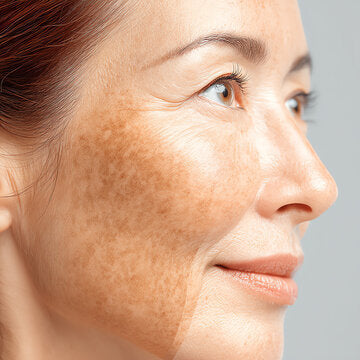
Oestrogen is a key regulator of collagen synthesis, and its decline during menopause triggers accelerated collagen degradation. Women can experience a dramatic loss of skin thickness and density in a relatively short period. Plant-based collagen peptides help counteract this by directly stimulating fibroblast activity, encouraging the skin to rebuild its structural framework despite reduced hormonal support.