



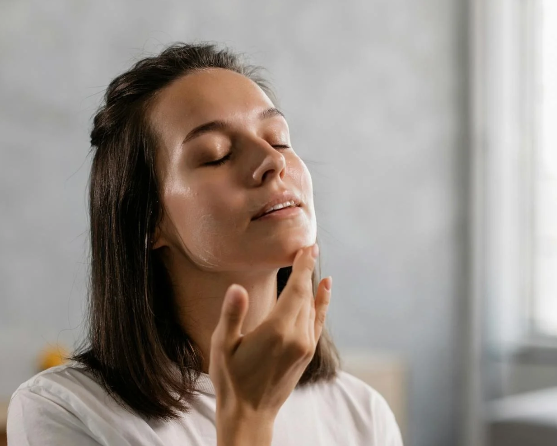
Arginine

A naturally occurring amino acid that fortifies the skin's moisture barrier and supports collagen integrity during hormonal transition.
Arginine is a semi-essential amino acid found naturally within the skin's own moisturising complex. It plays a critical role in maintaining hydration by drawing water into the upper layers of the epidermis, helping skin retain its plump, supple texture. As a precursor to nitric oxide, arginine also supports healthy microcirculation, encouraging nutrient delivery to skin cells that may be struggling under hormonal stress.
In menopause-targeted skincare, arginine is particularly valued for its ability to support the skin's natural repair processes. It contributes to collagen synthesis and helps strengthen the moisture barrier — two functions that become increasingly compromised as oestrogen levels decline. When applied topically, it works to smooth fine lines and restore a sense of resilience to skin that feels thinner or more reactive than it once did.
A Brief History of Arginine in Skincare
Arginine has been recognised in biochemistry since the late nineteenth century, though its skincare applications emerged much later. Researchers initially studied it for its role in wound healing and tissue repair, noting that topical application accelerated recovery in compromised skin. By the early 2000s, cosmetic chemists began incorporating arginine into anti-ageing formulations, recognising its dual function as both a humectant and a cellular support ingredient.
Today, arginine appears in advanced serums and barrier-repair treatments worldwide. Its gentle profile makes it suitable for sensitised skin, and its compatibility with other active ingredients has secured its place in modern formulation science.
How Arginine Supports Skin During Menopause
During perimenopause and menopause, declining oestrogen levels reduce the skin's ability to produce collagen and retain moisture. Arginine directly addresses both concerns. By supporting the natural moisturising factor within the stratum corneum, it helps counteract the dryness and tightness many women experience. Its role in nitric oxide production also promotes blood flow to the skin's surface, encouraging cellular turnover and giving dull, hormonally fatigued skin a more vital appearance.