





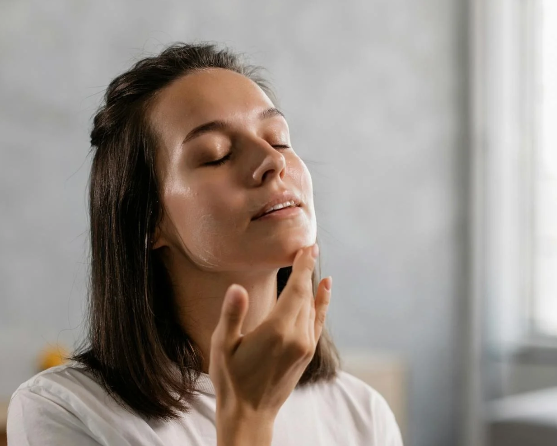

Your Skin Is Speaking, Here’s How to Hear It
Your Skin Is Speaking, Here’s How to Hear It
The whispers are there.
A beloved moisturizer doesn’t absorb quite like it once did. Your cheeks feel a little tighter by evening. And that trusted foundation? It no longer blends as seamlessly as it used to.
As we move through midlife, our skin might not shout, but it certainly communicates. Learning to listen without judgment or worry can become one of the most empowering acts of self-care.
Your skin isn’t merely reacting. It’s responding to hormonal shifts, stress, sleep, and the natural rhythm of change. By tuning in, you can respond in kind, offering care that evolves as gracefully as you do.
Why Your Skin Speaks a Different Language in Midlife
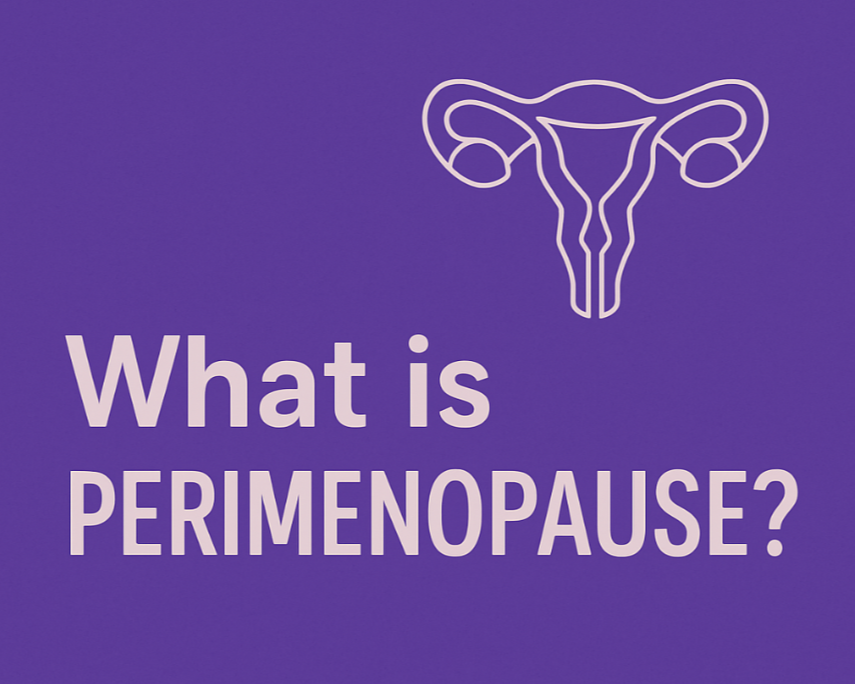
In your 40s and 50s, your skin doesn’t just look different; it functions differently. These changes are largely driven by hormonal fluctuations, especially the decline in estrogen, which affects the skin’s structure, texture, and resilience.
Here’s what happens beneath the surface:
-
Collagen and elasticity: Skin loses firmness as collagen production slows.
-
Oil production: Natural sebum decreases, leading to dryness.
-
Barrier strength: The skin becomes thinner and more sensitive.
-
Cell turnover: Renewal slows, making texture appear dull or uneven.
Research shows that the loss of estrogen during perimenopause and menopause contributes to a 30% reduction in skin collagen within the first five years after menopause. This explains why skin may start feeling less firm and more reactive around this time.
These changes are gradual but cumulative. And while they’re entirely natural, they also mean that your skincare routine must evolve to keep pace with your skin’s new rhythm.
Recognizing When Your Skin Seeks Something New
Your skin communicates through sensations and patterns, not words. Paying attention to these subtle cues can reveal exactly what it needs.
Here’s how to interpret some of its most common messages:
-
Post-cleansing tightness: Your skin barrier may be compromised. Switch to a gentler, cream-based cleanser.
-
Heightened redness or stinging: Ease back on strong actives like glycolic acid.
-
Dullness or uneven texture: Indicates slower cell turnover; gentle exfoliation can help.
-
Unexpected breakouts: Often linked to hormonal fluctuations or barrier imbalance.
-
When trusted products stop working: It’s a sign your skin’s needs have evolved. Time to reassess ingredients and textures.
These aren’t signs of failure. They’re invitations. Your skin is asking you to adapt, not to fix.
How to Listen Without Overthinking
Listening to your skin doesn’t need to feel complicated or clinical. Here’s where to start:
-
Slow down your routine. Take a few mindful minutes to observe how your skin feels morning and night.
-
Notice patterns. Does dryness appear after a certain product? Does your complexion calm when you simplify?
-
Change gradually. Introduce one new product at a time and allow at least two weeks to assess results.
-
Focus on consistency, not correction. Skin in midlife often responds best to steady, gentle routines.
Clinical dermatology research supports the value of “adaptation periods” when introducing active ingredients like retinol or acids. Gradual use reduces irritation and improves long-term tolerance.
Transforming Care into Communication
Midlife can feel loud, physically, emotionally, and hormonally. But your skincare routine can be a quiet ritual of reconnection.
It’s not about returning to how your skin used to be; it’s about supporting how it is now.
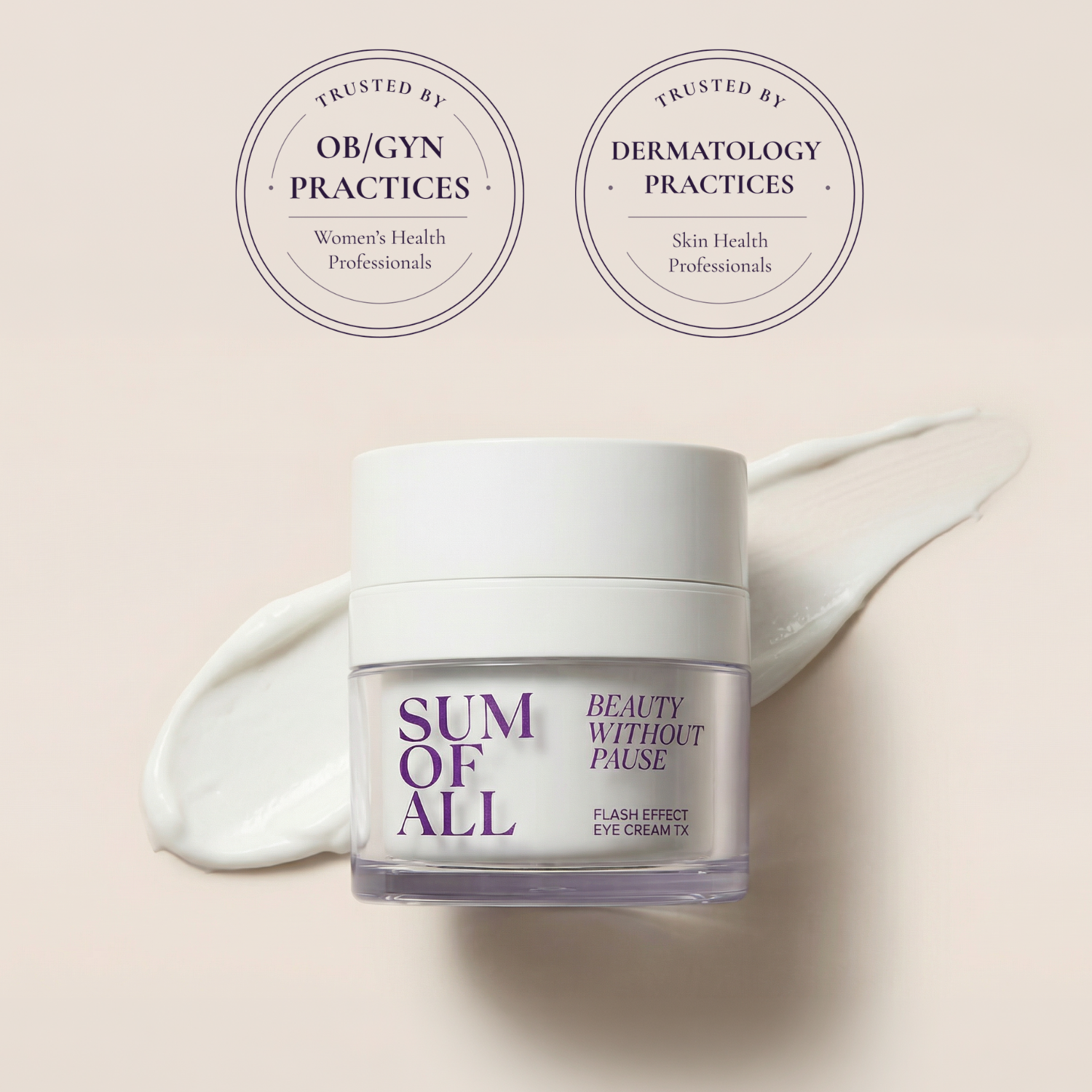
This is the philosophy behind SUM OF ALL: hormone-conscious, plant-infused skincare that nurtures without overwhelming. Every formula, including the SUM OF ALL Replenishing Night Cream with encapsulated retinol, is designed to respect the skin’s evolving needs, enhancing collagen renewal while maintaining comfort and calm.
Encapsulated retinol technology allows retinol to release gradually into the skin, minimizing irritation and improving efficacy - a benefit supported by extensive dermatological studies on retinoids and midlife skin renewal.
By transforming skincare into dialogue, you move from reacting to relating, from fixing to fostering.
The Outcome of Listening
When you start to listen, everything changes.
Your skin stops being a checklist of concerns and becomes a reflection of your well-being. You start to see softness, calm, and strength, not just on the surface, but within.
Listening brings harmony to your skin, your confidence, and your sense of self.
Your skin is speaking. You don’t need to fix it - just to hear it.
Sources
Shuster, S., Black, M. M., & McVitie, E. (1975). The influence of age and sex on skin thickness, skin collagen, and density. British Journal of Dermatology. View Study
Mukherjee, S., et al. (2006). Retinoids in the Treatment of Skin Aging: An Overview of Clinical Efficacy and Safety. Clinical Interventions in Aging. View Study
Kang, S., et al. (2018). Topical Retinoids in Aging Skin: An Evidence-Based Overview. Dermatology and Therapy. View Study
Read more

Your 5 Expert Approved Skincare Swaps for Spring Revival As the final chill of winter faded, I began to feel it, the quiet promise of spring in the air. The sun felt warmer, the days grew longer, a...
It was one of those mornings when you wake up and, before you even open your eyes, you can feel something is different. Maybe it is the way the light hits your face or the way your pillow still fee...